This is my Cambridge Independent article this week
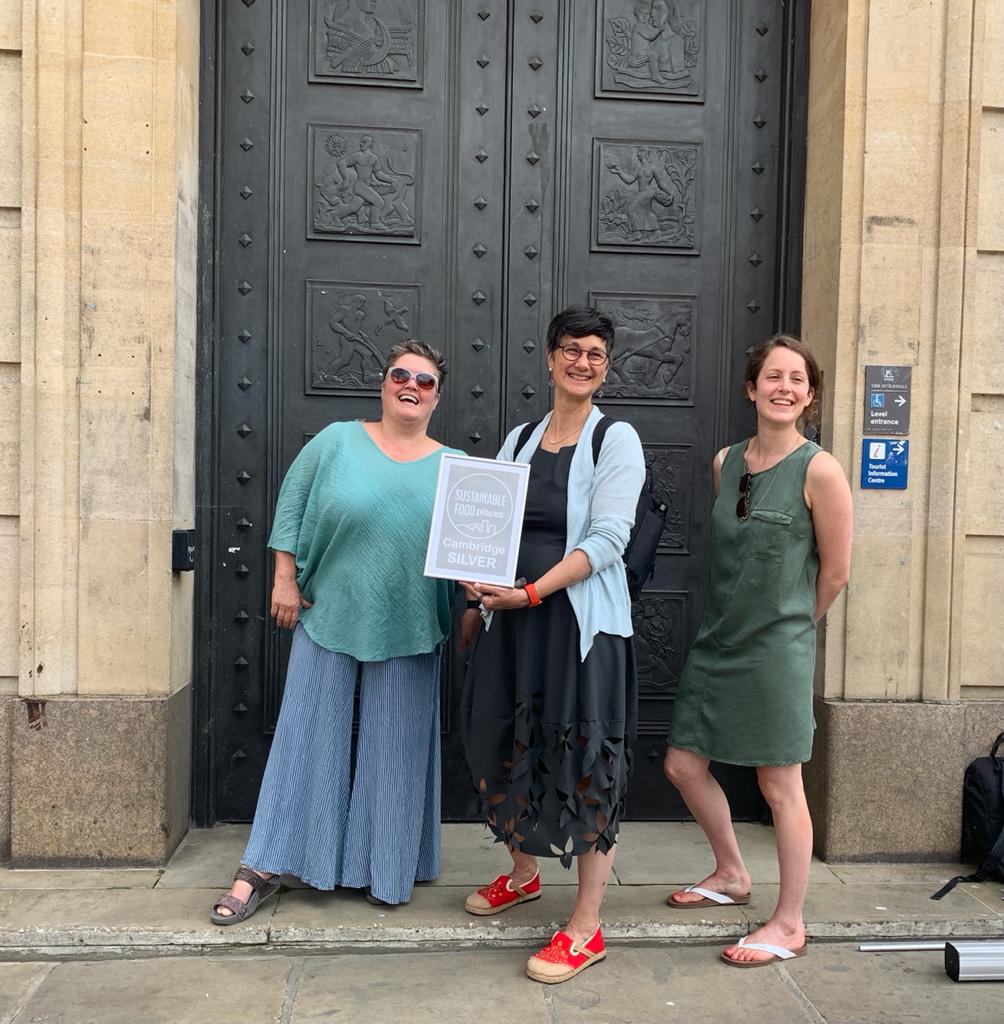
(The photograph above shows Sam Dyer, Katie Thornburrow and Gemma Birley outside The Guildhall in 2024 with the Sustainable Food Place Silver award received by Cambridge Sustainable Food Partnership.)
The Civic Quarter sits at the heart of Cambridge. It represents centuries of our collective civic, commercial, and cultural life. The Market Square has been a focus for the city since the Middle Ages, the Guildhall site has been the centre of local democracy for nearly 800 years, and the Corn Exchange has been a cornerstone of entertainment and community gatherings for more than a century and a half.
As a council, we hold all three in trust for the people of Cambridge. I believe we have a duty of stewardship to care for them properly and keep them in public and civic use. We should never consider selling them, but they must be properly maintained. That means investing in renewal and restoration after decades of underinvestment.
The problems are serious. The Market Square cobbles have not been repaired for roughly 20 years, electrical and water supplies are outdated, and toilet facilities and stalls need modernising. The Corn Exchange, the largest music venue in our region, has a leaking roof. Meanwhile, the Grade II listed Guildhall costs over a million pounds a year to run, while large parts of it sit empty or compromised by asbestos, leaks, and poor energy performance.
Over the last few years, Cambridge City Council has been planning the quarter’s renewal. Costing major construction in historic city centres is hard, and recent global economic changes mean building materials are more expensive, energy costs are very high, as are borrowing rates. We are confident that work on the Market Square and Corn Exchange can proceed, subject to final reviews and agreement, but the Guildhall is trickier.
The Market Square will have a level surface, fully accessible for wheelchair users and pushchairs, with modern power, new trees and a restored fountain. A thoughtful mix of lockable, open, and removable stalls will help the market flourish while opening the square for evening events. And a comprehensive support package and temporary stalls will keep traders working while the square is being repaved.
At the Corn Exchange, acoustic upgrades, improved seating, better bars, and step-free access will keep it a premier cultural venue, generating vital income and memorable experiences for years to come.
Some have suggested selling the Guildhall. That might appear to offer a financial return but has a very low market value as it needs urgent repairs. A buyer cannot be guaranteed. Crucially, once sold, centuries of public access would end, and it would most likely become a private hotel. Postponing a decision merely defers the problem, inviting higher costs later and two disruptive rounds of construction rather than one.
Our preferred path is a carefully costed, sustainable refurbishment, turning a deteriorating historic asset into an accessible public building with a welcoming civic café, flexible meeting spaces, modernised facilities for weddings, civil partnerships and conferences, and dedicated space for democratic business, while meeting robust energy standards that dramatically cut carbon emissions.
We have developed detailed, cautious financial modelling across all three projects so that our decisions do not place an unmanageable financial burden on the council. The project team and our contractors have cut the initial estimates by over £10 million while safeguarding the scheme’s core public outcomes. And additional income from our successful Park Street redevelopment means we can establish a dedicated reserve to absorb early transitional costs and protect taxpayers against unforeseen shifts in the wider economy.
Taking responsible action today is not the easiest choice, but it is the right one. By facing the costs honestly, planning carefully, and maintaining our resolve as custodians of our public realm, we can secure the Corn Exchange, Market Square and Guildhall as thriving civic spaces for Cambridge for the next 100 years