I’ve just stepped out of the Guildhall to comment on the decision to approve redevelopment of the Market Square, which I believe is the right outcome
Category: Uncategorized
Bats, swifts, bees.. and squat toilets
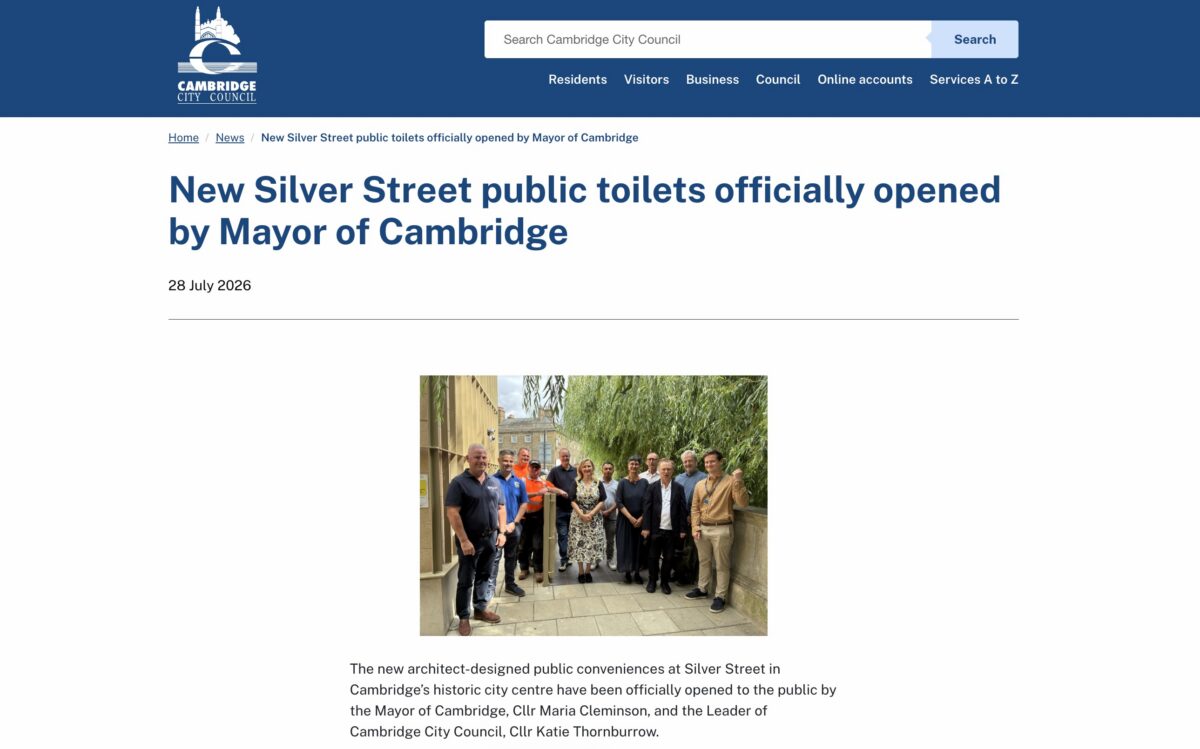
It’s been an interesting few days. Last Monday I was with the King to commemorate the seventy-fifth anniversary of Cambridge becoming a City, and this Monday I was at the opening of the new public toilets on Silver Street. In between there have been a lot of meetings and calls.
I am really pleased that the refurbished toilets are finally open, because the old toilets here were in a very poor condition and really unsuitable for such a busy site where lots of visitors to Cambridge pass by every day.
Accessibility, safety, and inclusivity sit right at the heart of the new design. We wanted to make sure that everyone felt welcome, so underground we have separate women’s and men’s facilities with a universal toilet situated between them.
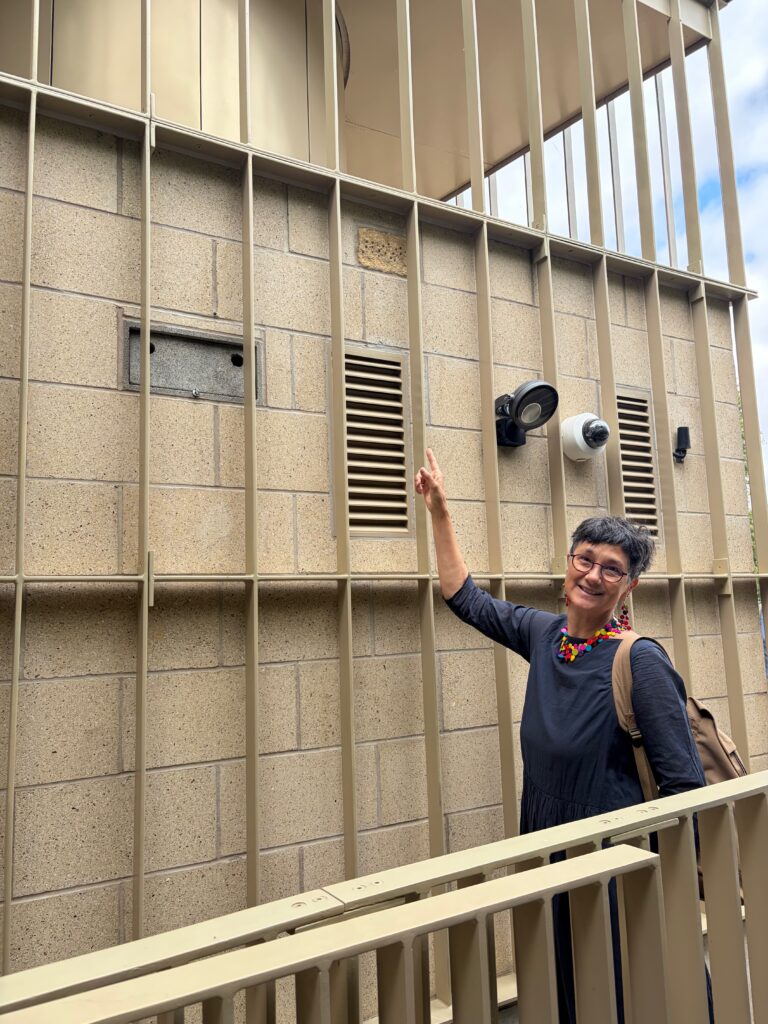
Both the women’s and men’s sections feature Cambridge’s first squat toilets in a public loo. They aren’t the only squat toilets in Cambridge, as there are some at Cambridge Central Mosque, but there are a thoughtful step forward in catering to international visitors and local residents alike.
Above ground, a large universal accessible toilet has been provided that also incorporates comprehensive baby-changing facilities. The integrated help points, clear layout, and carefully considered management arrangements will help ensure a welcoming and safe environment for all users.
Continue reading “Bats, swifts, bees.. and squat toilets”Cambridge has been a City for 75 years
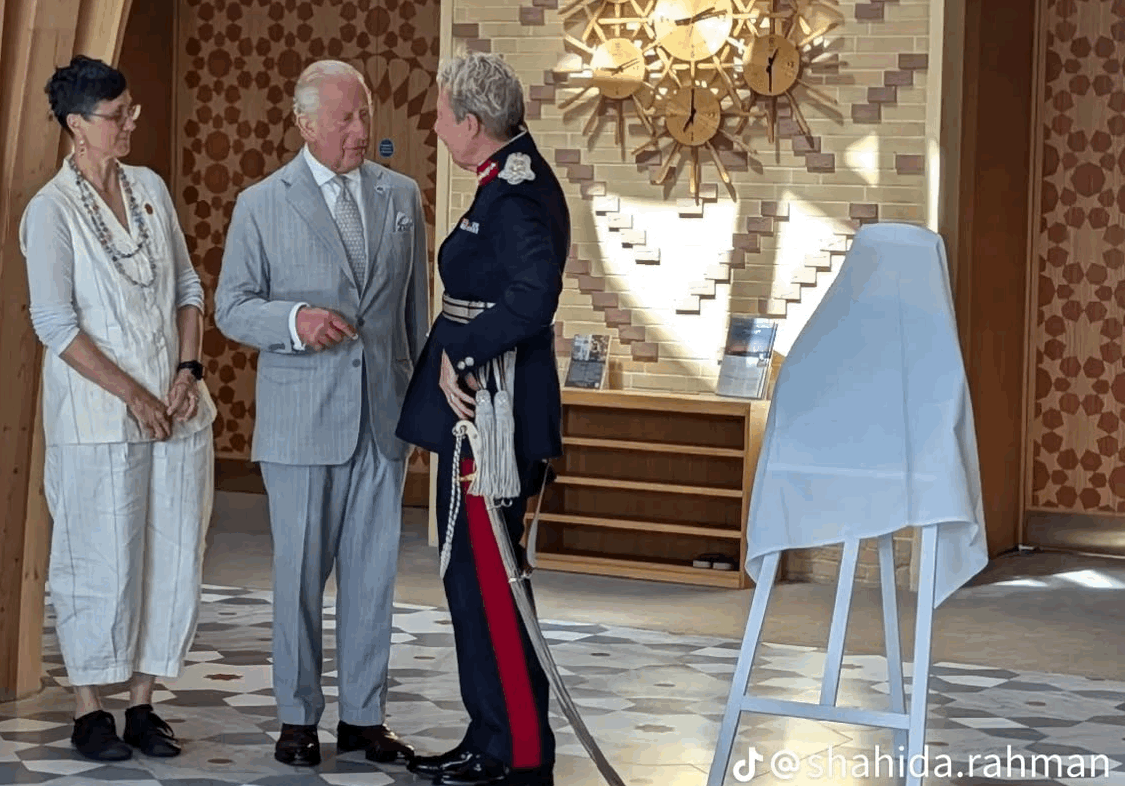
On Monday July 20th King Charles visited Cambridge and unveiled a plaque to commemorate seventy-five years since we were granted City status. It was a very special occasion, and I was really pleased to be there as Leader of the City Council, accompanied by Cllr Gerri Bird.
The King visited the Cambridge Central Mosque on Mill Road for the unveiling, and it was good too see the press coverage focusing on the building’s eco credentials which heat pumps, solar panels and the collection of spare water from bathroom sinks and rainfall.
It was also an important moment for His Majesty to reaffirm the diversity of Cambridge and our support for those of all faiths and none, at a time when so many people seek to divide us.
The photograph shows me with King Charles, and Julie Spence, Lord Lieutenant of Cambridgeshire. It was taken by Shahida Raman.
Read more about the day on the Cambridge City Council website.
Welcome to Cambridge South
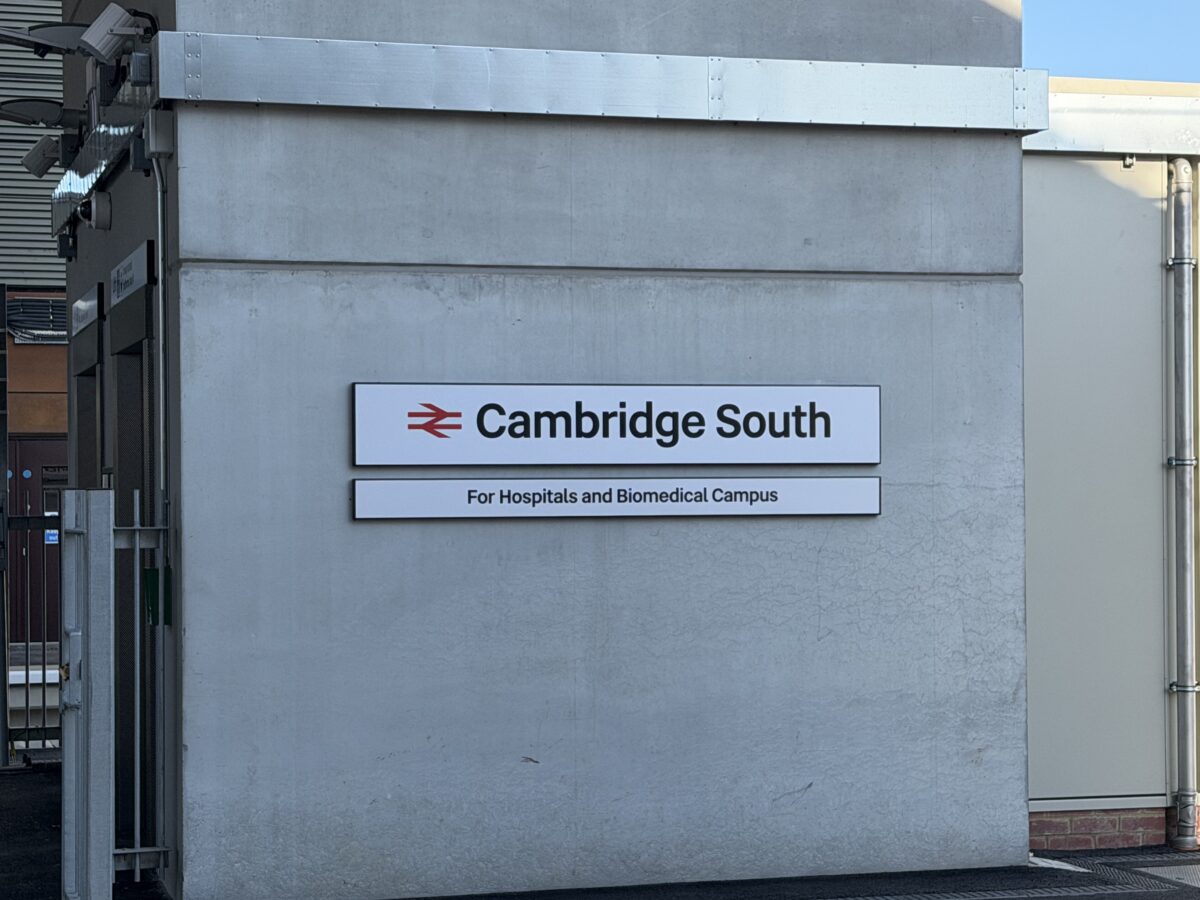
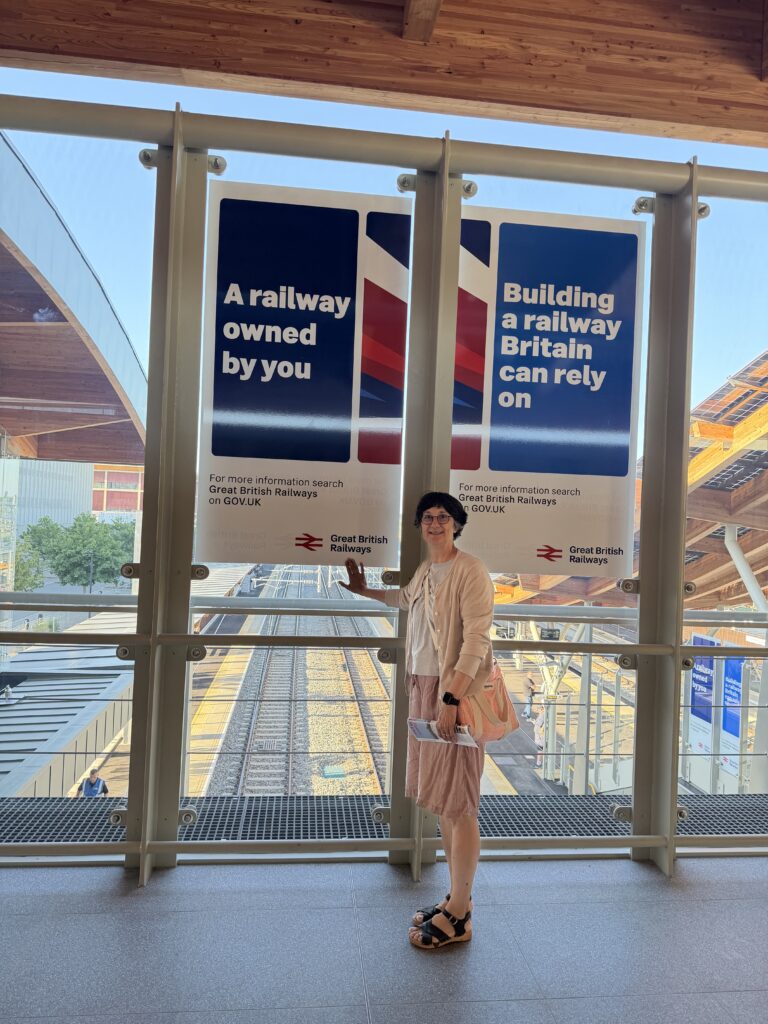
I was up very early on a Sunday morning to catch the 0631 train from Cambridge, but I wasn’t the only passenger. The train was the very first passenger train to stop at the newly opened Cambridge South station, and I wanted to mark the moment.
It’s a celebration tinged with sadness as we remember those who were killed and injured in the Bedford rail crash, and our thoughts are with all of those affected. So there was no big event here today, just the opportunity to explore our new rail station.
The Secretary of State for Transport granted planning permission in December 2022 and detailed design approvals (such as the specific appearance and layout of the station building) were later approved by the planning authority, so it’s great to see it in operation. I visited it a few months ago when it was almost finished.
And the new station is also the first in the country to have the new Great British Railways branding, marking the Labour government’s work to bring rail back into public ownership.
A new leader for Labour, and for the country
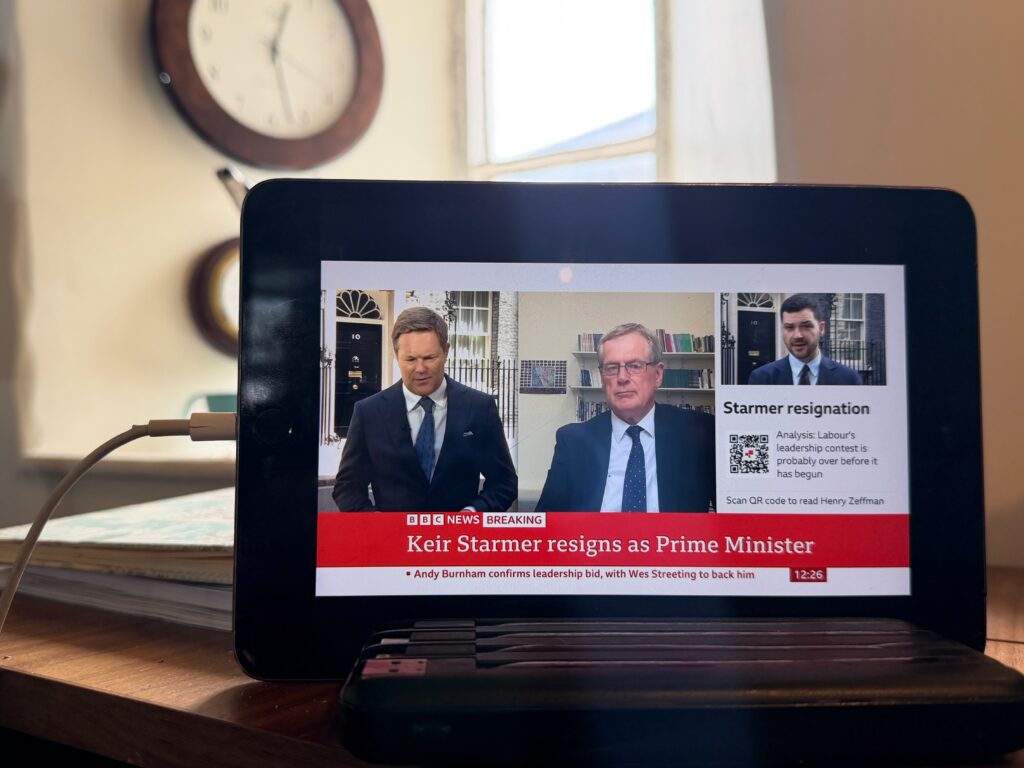
The Prime Minister has told the country that he will be leaving office, and now Labour will choose a new leader who will then form a government. The process will start on July 9th when Labour’s National Executive Committee opens nominations, and will be completed before Parliament resumes after its summer recess, in September.
This is not a system I would have chosen, as I feel that the country as a whole should be able to make the choice of the person who plays such an important role in our lives. However as things stand there is no need to call a General Election when changing party leader and that person will become Prime Minister as long as they have the support of a majority of the House of Commons. This is the way that several Conservative PMs took office over the last decade, and it is what will happen now.
It may be that the process means there isn’t even an election within the Labour Party, if only one MP comes forward for consideration. This is how both Theresa May and Rishi Sunak became PM.
Continue reading “A new leader for Labour, and for the country”A lovely day at Strawberry Fair
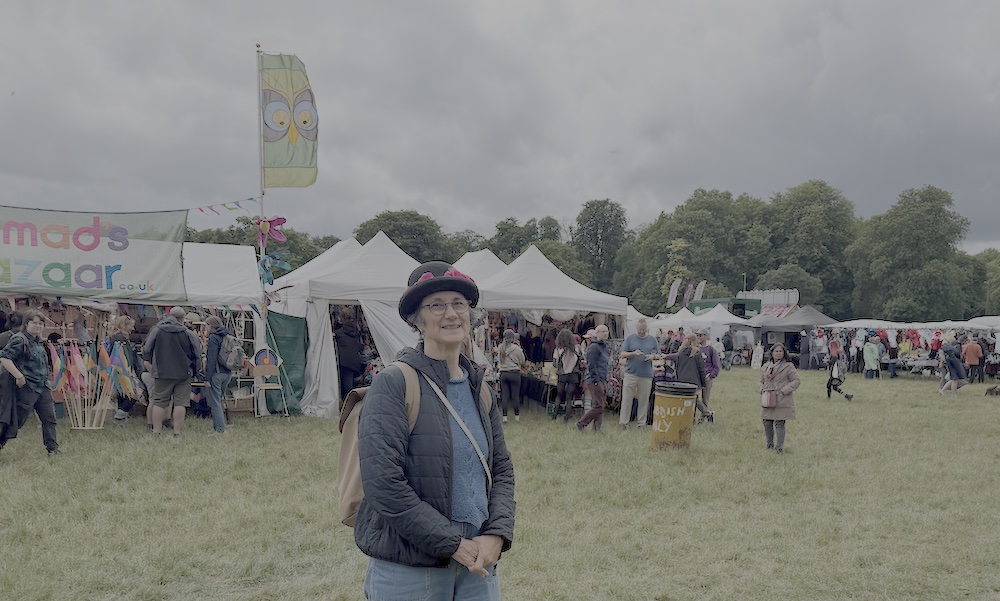
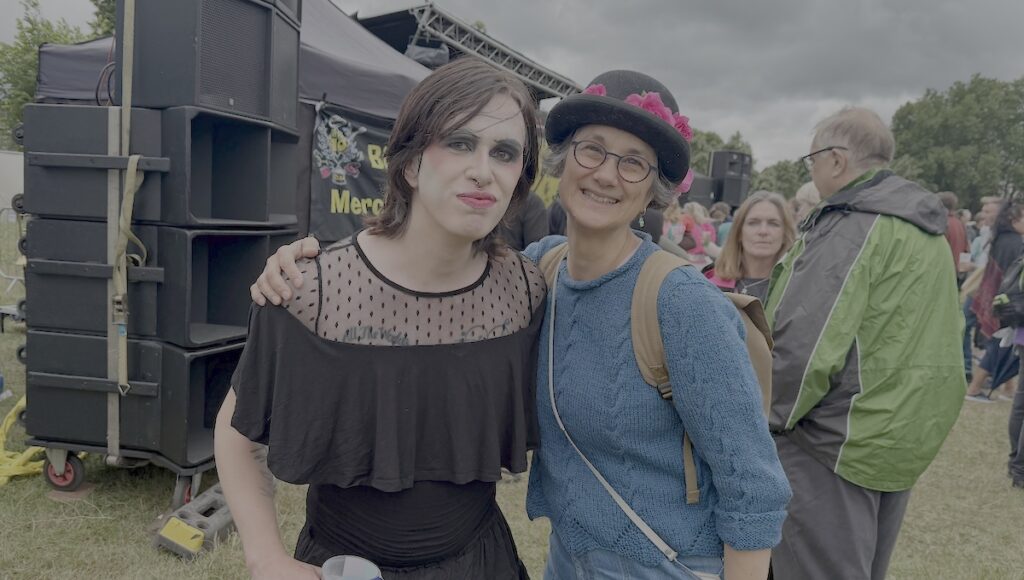
It was so lovely to be at Strawberry Fair today, and to see so many people having a brilliant time. I really loved the atmosphere, the fabulous variety of food stalls, clothes and cool stuff on offer, and of course the bands. It was great to catch ‘For The Hornets‘ live on the Revolting Stage, as their lead singer Adz Bond has been a friend of mine for twenty years!
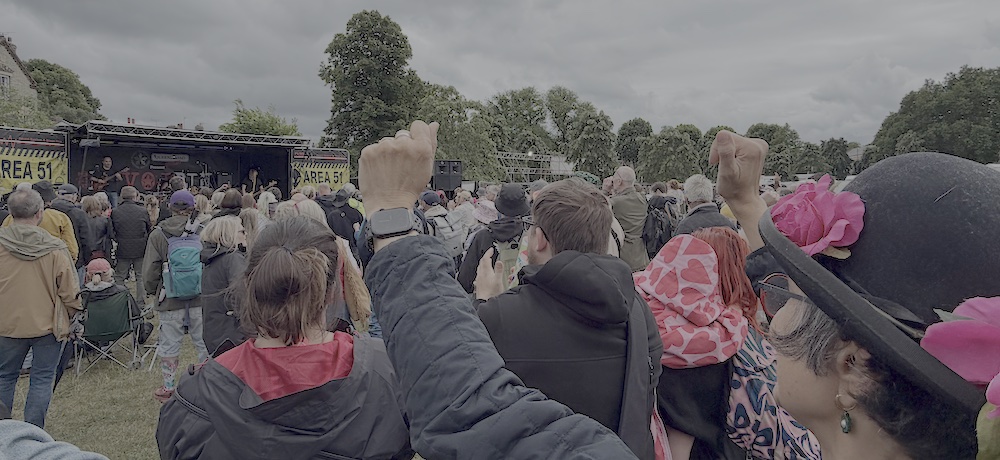
Strawberry Fair is free to attend because everybody helps with donations, sponsorship, volunteer hours, and word of mouth. Check out their site to see how you can help. It was lovely to see my friend James Youd in his steward’s vest helping with the Revolting Stage today.
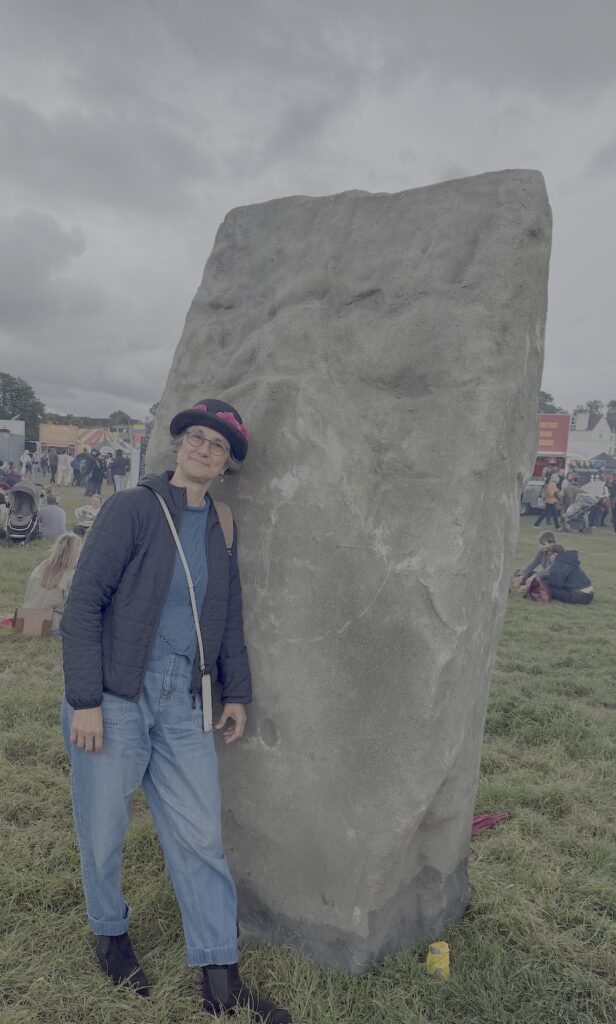
The field was really well laid out, and I particularly liked the stone circle. It’s a shame it won’t be there all year round, but I suspect it wouldn’t survive the cows.
Honoured to be the new leader of Cambridge City Council

At the City Council AGM on June 1st I was elected as the new leader of council.
These are my notes for a speech.
You can watch the meeting on the City Council YouTube channel and read the Labour Party announcement here. It’s also on the City Council website.
Notes towards a speech
I’d like to start by thanking Cllr Bick and Cllr Bennett, and everyone else who took part in the discussions and negotiations over the last ten days to get us here. I think we are in a good place to go forward together.
And I’d also like to acknowledge the hard work and professionalism of every person who keeps the Council running, from the Chief Executive and other officers, to the whole team here and Mandela House and in offices and depots around the city.
Thank you to those keeping the parks in fantastic condition, and my wonderful team at Shared Planning and 3C Building Control.
Thanks to the the unions supporting so many of our workers, to everyone keeping our buildings and sites running and secure, and to those helping councillors to be as effective as possible as we serve the people of Cambridge.
Continue reading “Honoured to be the new leader of Cambridge City Council”Looking at the resilience of Cambridge
You may have noticed that things have been a little bit tricky for me at the moment as a failure to reach agreement on the leadership of Cambridge City Council at our AGM on May 21st means that there are no council committees, no cabinet members, and attendance at external events has largely stopped because we no longer hold formal roles. It should all be resolved when we meet on Monday June 1st.
While there are lots of meetings and conversations, my diary is strangely empty, because the many briefings, training sessions, committee meetings and other council business has all temporarily gone. But it does leave me free for some of the work I do in addition to being a councillor, around food policy, water scarcity and the climate emergency.
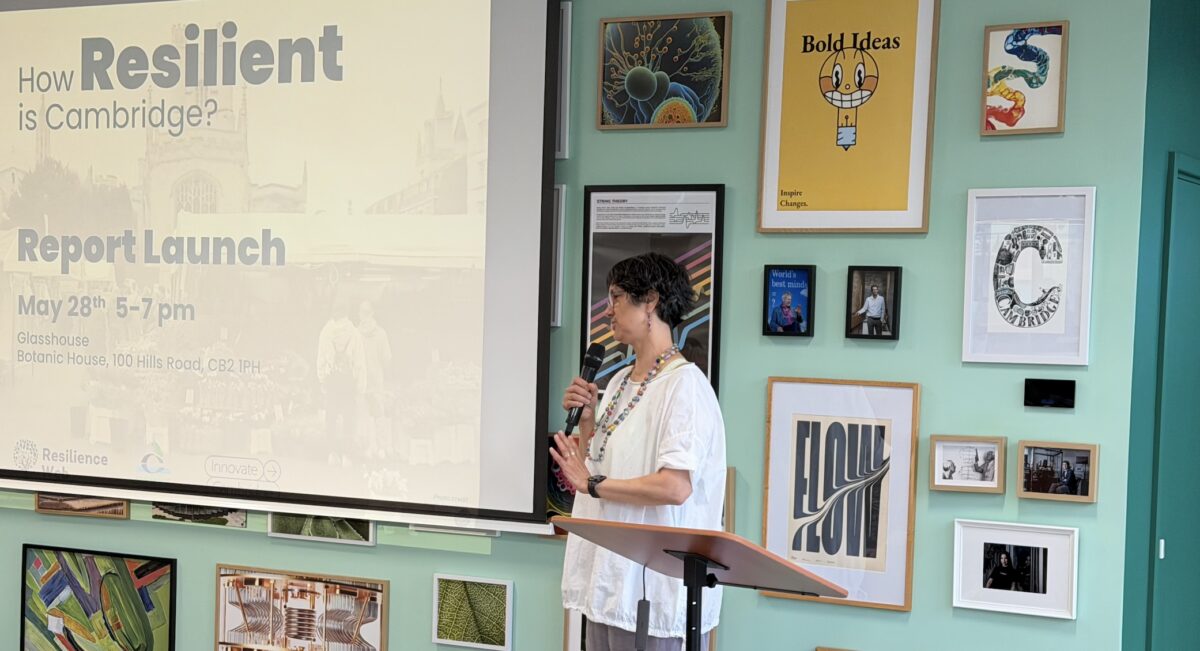
Yesterday I got to see the latest stage of a project that I’ve been involved with for a long time, looking at how resilient Cambridge is in a number of key areas. Resilience Web Cambridge and the Cambridge Room organised a series of seminars and have now published a report on what they found.
The events ran from Wednesday 21 January to Wednesday 8 April 2026 and looked at food, reuse, flooding, energy, communications, community. Each involved a group of experts drawn from local community groups as well as national experts, local councillors and the interested public. They were organised as hybrid meetings.
The report is a vitally important document, but it doesn’t mark the end of the project – because now we follow through what we are reporting on.
There will now be workshops to explore solutions, using the good practices that have been identified by the project to date, and we are considering how to develop resilience toolkits for local residents to use. As Helen Cook and Charlie Barty-King from Resilience Web put it, “resilience isn’t just about bouncing back after disaster, but about transforming how we operate now to anticipate and avoid crises as much as possible, and to make a positive response to a crisis second nature.”
I was really pleased to be able to introduce the report to a packed room at the Glasshouse, and to have the chance to talk to so many people about this important work.
Read more on the Resilience Web website
Download the full report here.
Download the summary as a PDF here.
My Response to the DevCo Consultation
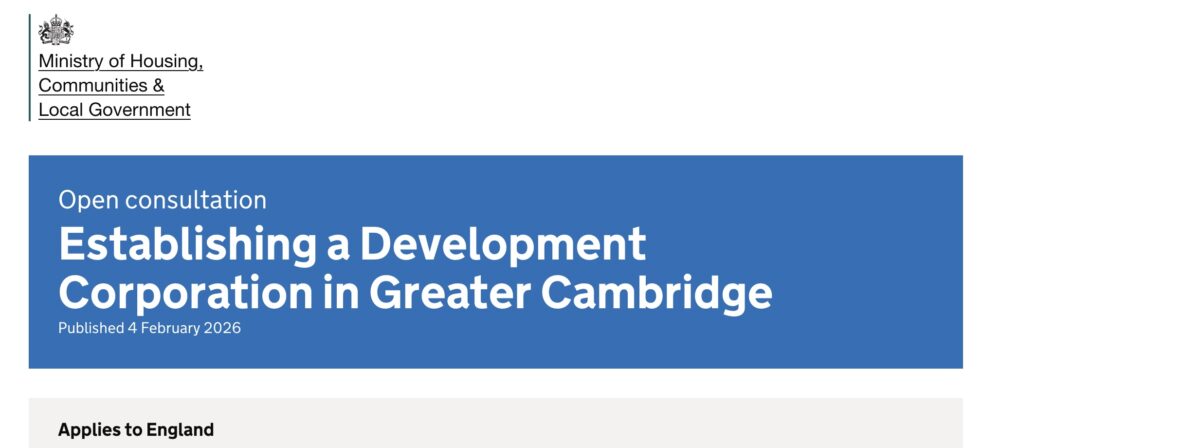
The government wants to create the Greater Cambridge Development Corporation and there is a formal consultation our views. Many local groups have submitted theirs, for example this from Cambcycle, as well as the City Council. You have until 11:59 tonight (April 1st) to get yours in!
I’ve already written here about my views, but these are the answers I have submitted as an individual – please note that they are not a formal City Council or Labour response.
What do you think about the current delivery of infrastructure and homes in Greater Cambridge?
While Greater Cambridge has experienced constraints in infrastructure (particularly water supply, waste and transport), local planning capability is not the problem. The Greater Cambridge Shared Planning Service (GCSPS) is recognised as the most progressive and effective planning authority in the country, having won the RTPI Planning Authority of the Year in 2025.
The consultation documents refer to a6:1 imbalance between job creation and housing supply (41,000 new jobs created between 2011 and 2019) but this historic data does not reflect current reality where job creation has slowed and house building grown. We need accurate and current data to support decision making.
Continue reading “My Response to the DevCo Consultation”What we want from a Development Corporation
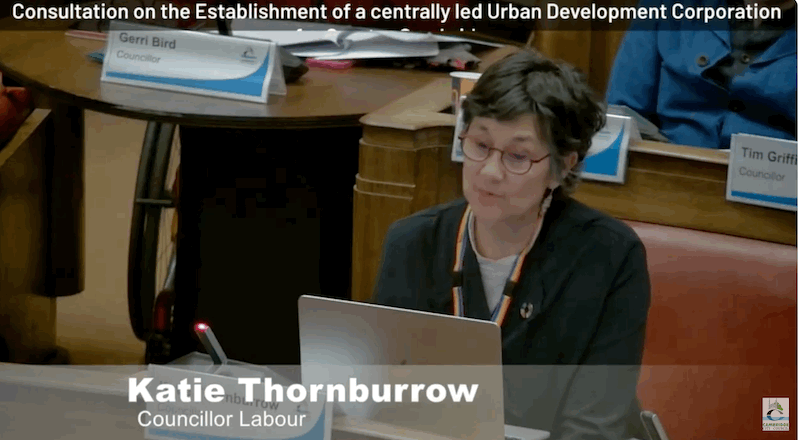
On March 19 Cambridge City Council held an extraordinary meeeting to discuss its response to the Government consulation on “Establishing a Development Corporation in Greater Cambridge” – please read more and respond online.
Each councillor got three minutes to talk, and these are my speaking notes which i mostly followed. They reiterate the points I’ve made elsewhere. You can also watch the whole debate on the City Council YouTube channel.
Notes Towards a Talk
While we have concerns over the shape, function and makeup of a future Development Corporation, I think we should welcome the government’s recognition that Greater Cambridge will benefit from extra help and support.
We face enormous difficulties due to systemic, national-level constraints in water supply, waste water treatment, electricity grid capacity, communications, and transport.
So, if a devco can provide the national convening power and multi-billion-pound, long-term investment needed, we will embrace it.
However, we want it on our terms, working with elected local authorities not against us.
We want a development corporation to help us to deliver our ambitions, not countering them
To expand what is possible, not limit our potential
And to help deliver our promises to the people of Cambridge, made when they elected us.
So, what does that mean?
Continue reading “What we want from a Development Corporation”