My Response to the DevCo Consultation

The government wants to create the Greater Cambridge Development Corporation and there is a formal consultation our views. Many local groups have submitted theirs, for example this from Cambcycle, as well as the City Council. You have until 11:59 tonight (April 1st) to get yours in!

I’ve already written here about my views, but these are the answers I have submitted as an individual – please note that they are not a formal City Council or Labour response.

What do you think about the current delivery of infrastructure and homes in Greater Cambridge?

While Greater Cambridge has experienced constraints in infrastructure (particularly water supply, waste and transport), local planning capability is not the problem. The Greater Cambridge Shared Planning Service (GCSPS) is recognised as the most progressive and effective planning authority in the country, having won the RTPI Planning Authority of the Year in 2025.

The consultation documents refer to a6:1 imbalance between job creation and housing supply (41,000 new jobs created between 2011 and 2019) but this historic data does not reflect current reality where job creation has slowed and house building grown. We need accurate and current data to support decision making.

Continue reading “My Response to the DevCo Consultation”

What we want from a Development Corporation

On March 19 Cambridge City Council held an extraordinary meeeting to discuss its response to the Government consulation on “Establishing a Development Corporation in Greater Cambridge” – please read more and respond online.

Each councillor got three minutes to talk, and these are my speaking notes which i mostly followed. They reiterate the points I’ve made elsewhere. You can also watch the whole debate on the City Council YouTube channel.

Notes Towards a Talk

While we have concerns over the shape, function and makeup of a future Development Corporation, I think we should welcome the government’s recognition that Greater Cambridge will benefit from extra help and support.

We face enormous difficulties due to systemic, national-level constraints in water supply, waste water treatment, electricity grid capacity, communications, and transport.

So, if a devco can provide the national convening power and multi-billion-pound, long-term investment needed, we will embrace it.

However, we want it on our terms, working with elected local authorities not against us.

We want a development corporation to help us to deliver our ambitions, not countering them

To expand what is possible, not limit our potential

And to help deliver our promises to the people of Cambridge, made when they elected us.

So, what does that mean?

Continue reading “What we want from a Development Corporation”

“Let’s Talk About” – the Greater Cambridge Development Corporation


On the evening of March 4 I took part in a public discussion about the government’s consultation on establishing a Development Corporation for Greater Cambridge, organised by the Cambridge Room, of which I am proud to be a Trustee.

We were joined by Peter Freeman and Beth Dugdale from the Cambridge Growth Company and Cllr Dr Tumi Hawkins from South Cambs District Council. Also on the panel was Eleanor Riley from The Ministry of Housing, Communities and Local Government who talked through government context and details of the consultation.

Each of us was given a chance to outline our views, and these are the speaking notes I used – though I may have said something slightly different on the night.

The consultation on the Development Corporation runs until the end of the month and I urge you to read the papers and make your own contribution. And perhaps my notes will be helpful.

Notes towards a talk

Thank you all for being here. Today, I want to share my thoughts on the proposed development corporation (devco), and I have three main points to make: one is a common-sense point about democracy, one is a practical concern about the planning service drawn from my own experience, and the third is a more radical proposal for the future of Greater Cambridge, because the challenge today is not just acknowledging the devco and the government’s ambitions, but defining how we use it to deliver our wider objectives rather than just “business as usual” expansion.

First, we must address the democratic deficit that is too easily built into a centrally-led Urban Development Corporation. The government’s proposal relies on a top-down model where the board is appointed by the Secretary of State. While the proposal invites local council leaders and the combined authority mayor to sit on this board, having a few seats at the table is simply not enough for true democratic integration. To meet our challenges, the board must also include specific expertise in ecological resilience, local food policy, circular economics, and community or youth engagement.

Continue reading ““Let’s Talk About” – the Greater Cambridge Development Corporation”

How will we feed ourselves?

Last Wednesday, January 21, the Council Chamber in Cambridge Guildhall was filled with a group of people brought together to consider one of the most important questions facing us today: how do we feed ourselves? They were joined online by others as part of a series of public conversations about the main challenges and opportunities that Cambridge faces under the theme “How Resilient is Cambridge?”

The meeting was convened through a partnership between Cambridge City Council, the Resilience Web (resilienceweb.org.uk) and the Cambridge Room (cambridgeroom.org), and marked the end of a process that started in July 2022 when I made a commitment in a City Council meeting commitment to find a way to “explore the resilience of the city to the climate emergency in a series of open consultations.” I knew that something like this takes planning, organisation and support and I am grateful that the Cambridge Room and Resilience Web were able to provide all three.

It was the first in a series where we will be talking about several aspects of resilience, including flooding, energy, and communications, but I’m pleased that we started with food security because it was thinking about this that led me to become a city councillor in the first place.

Continue reading “How will we feed ourselves?”

The consultation on the Local Plan is open

This evening I took part in a public meeting in St Barnabas Hall organised by the Friends of St Matthew’s Piece to help residents who want to contribute the the new Local Plan for Cambrige and South Cambridgeshire.

I outlined the plan process and talked about some of the key policies being proposed before we had a wide-ranging discussion about the principles, the practice, and the way the Local Plan fits with the work of the Cambridge Growth Company.

Here is the presentation I used, with details of particular policies that I had been asked to focus on.

I hope all those present will take the time to comment, either as individuals or as a group, and I urge you to do the same. Even if you only want to comment on a specific area, please take the time to get involved and let the councils know what you think. If there are policies you think are really important, like around tree canopy or open spaces, let us know that they matter to you – that way they are more likely to make it into the final plan.

You can find all the details of the draft Local Plan on the planning website at https://www.greatercambridgeplanning.org/local-plan and take part in the consultation by going to https://consultations.greatercambridgeplanning.org/draft-greater-cambridge-local-plan-consultation. The consultation is open until  5pm on Friday 30 January 2026.  

Redeveloping the Beehive Centre

I’ve just been talking to Emma Bullimore on BBC Radio Cambridgeshire about the Beehive Centre scheme which has been granted permission for an “outline application (with all matters reserved) for the demolition of existing buildings and structures and redevelopment of the site for a new local centre”(reference 23/03204/OUT if you want to check it on our planning portal).

I explained that earlier this year I had been on the planning committee waiting to consider the application and the case officer’s recommendation to refuse the application, when we heard that the Secretary of State for Housing, Communities and Local Government would make the decision. We decided to consider the application anyway and make an “in principle decision” so that we could listen to the case officer, objectors and supporters, and to debate the application. The committee unanimously agreed that to support the officers recommendation.

Continue reading “Redeveloping the Beehive Centre”

A Future for Rail in Cambridge

I’m a great believer in developing an integrated transport strategy that makes the best possible use of railways, and I’ve been the chair of the East West Main Line Partnership for some months now. The Partnership brings together the various local authorities and other bodies with an interest in EWR. The Partnership is not responsible for the design and route of the Oxford-Cambridge scheme – that is the responsibility of the East West Railway Company – but we are key to establishing the vision for this vital route.

Today I was briefed about current progress, and will have a further meeting with two planning officers who are now dedicated to the work of EWR and the implications for South Cambs and Cambridge. This follows the announcement from the Department for Transport about the development of the service and includes hybrid battery-electric trains to deliver faster, greener services along the partially electrified route while keeping costs down, a new eastern entrance at Cambridge station and – finally – formal plans for a new Cambridge East station. This is something I’ve been advocating for years and it’s great to see it come to pass. And it’s good to see that the announcements are in line with the submission to the consultation made by the Shared Planning Service on behalf of South Cambs and the Cambridge City Council.

Continue reading “A Future for Rail in Cambridge”

Roads and plans

I had an interesting day on Saturday, beginning by trying to avoid being run over by cars or cyclists as I draped a tape measure across Ainsworth Street in the company of my fellow councillor, Richard Robertson, followed by a deep discussion about the future of the whole of Greater Cambridge at an event organised by local historian and advocate for democracy, Anthony Carpen. From the gutter to the far horizons.

First the gutters. The County Council is consider a resident parking scheme for Ainsworth Street, and parts of Hooper Street, Sturton Street Sleaford Steet, Abbey Walk, and Fairsford Place in Petersfield ward. It has been under consideration for several years and while most people agree that a scheme is required some people have serious concerns about the details and the proposed final locations of parking spaces.

One issue is whether streets are wide enough to allow safe parking on both sides or if it must be restricted. At the moment Ainsworth Street has parking on both sides along most of its length, and the scheme proposes a change to parking only on one side.

Continue reading “Roads and plans”

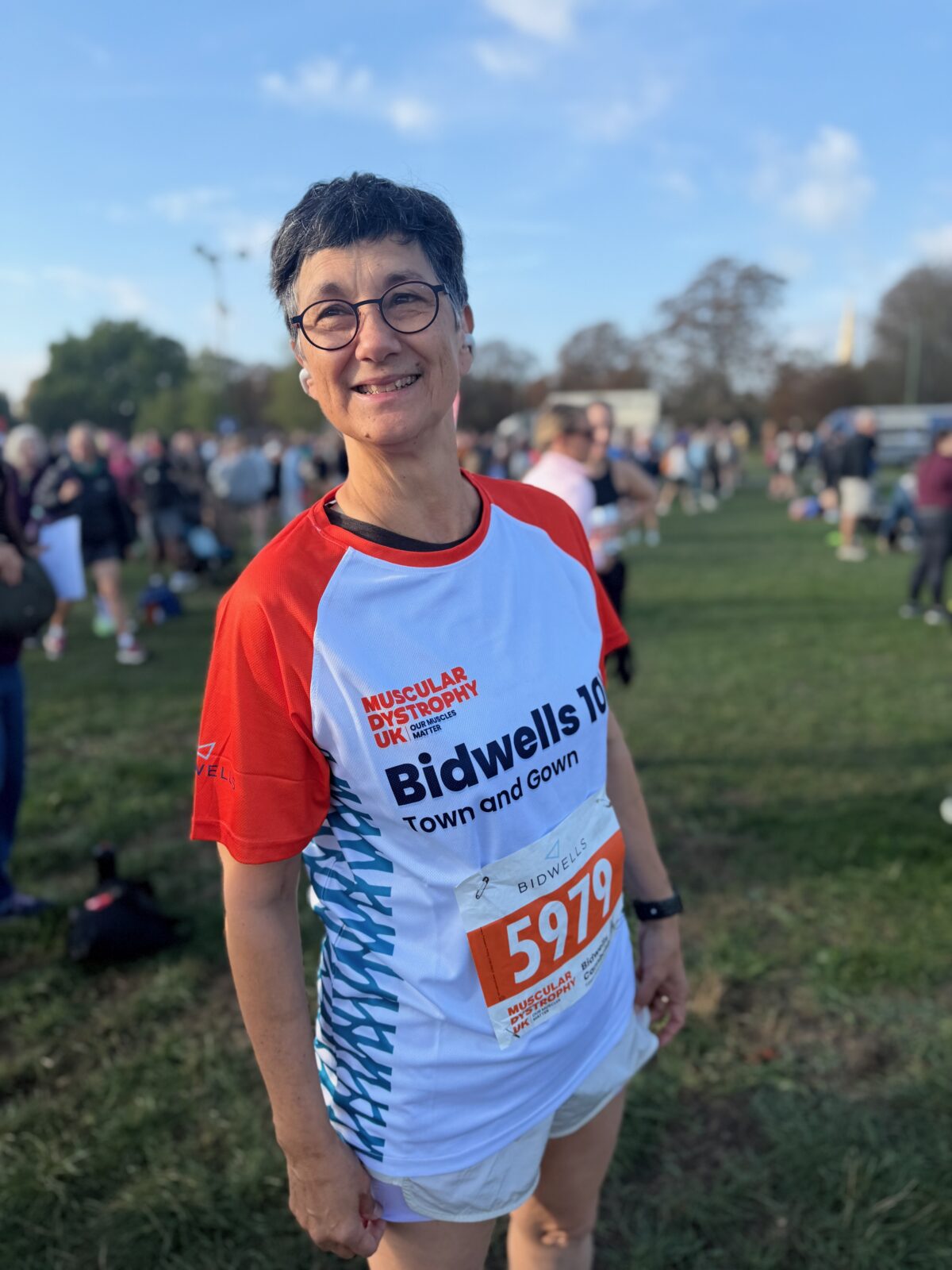
Running the Town and Gown 10K

I’m currently sitting in The Alex, one of Cambridge’s finest pubs, enjoying a pint after running the Cambridge 10K in 1hr 03 min, a much better time than I thought I’d manage when we headed off to Midsummer Common this morning.

The organisation was excellent, the atmosphere was friendly and welcoming, and there were people cheering us on. And the weather was kind.

I was raising funds for Muscular Dystrophy UK and I’m pleased to have made a small contribution to research into this genetic condition in the hope that we can improve treatments and find a cure.

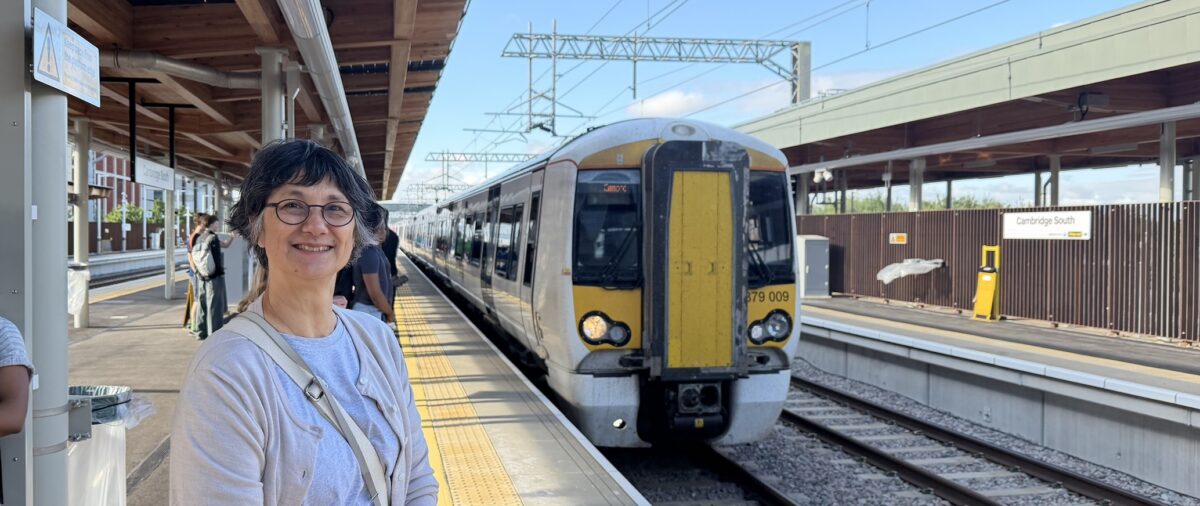
On the way to Cardiff

Today I’m off to Cardiff to join the launch of the Public Map Platform, a project led by Cambridge University to create a mapping tool that captures and highlights what truly matters to communities. I’m very excited about this.

“Public Map is an open-source mapping platform that aims to show that a transparent and trustworthy planning system based on maps made by and for communities is really possible.” The wonderful Professor Flora Samuel will be there and speaking. What will I learn and are there lessons for Cambridge?

And I’m travelling to Cardiff by train. Through the magnificent Paddington station which has reminded me of the very many times I was here as I travelled to Bath during my student days. Will we be able to travel from Cambridge to Oxford and onto Bristol and Cardiff when the East West Rail arrives in our city? I think that we will!!

Regarding trains… I’m pleased that Rail Future East Anglia has been added to the statutory list for rail strategy consultation after I raised this at the July 2025 Peterborough and Cambridgeshire Combined Authority (CPCA) Transport Committee where I am the Cambridge representative.

I managed to catch a couple of speeches and a debate at the Cam Tech event that was held at the Cambridge Guildhall two weeks ago. At the event I met the new CPCA Mayor Paul Bristow and briefly discussed trains, local democracy and small businesses.

Tomorrow I have the planning committee, where we will consider three Minor applications.

The following Wednesday I will be chairing the Joint Planning Advisory Group which will be held at South Cambridgeshire District Council in Cambourne .

On Thursday 9th I will be attending the full Council meeting at the Guildhall.

In between all of this I know I’ll get many opportunities to meet residents and businesses, join their meetings, walk around some estates and gardens. A very varied few weeks.

And at the weekend I’m running the Town and Gown Cambridge 10K