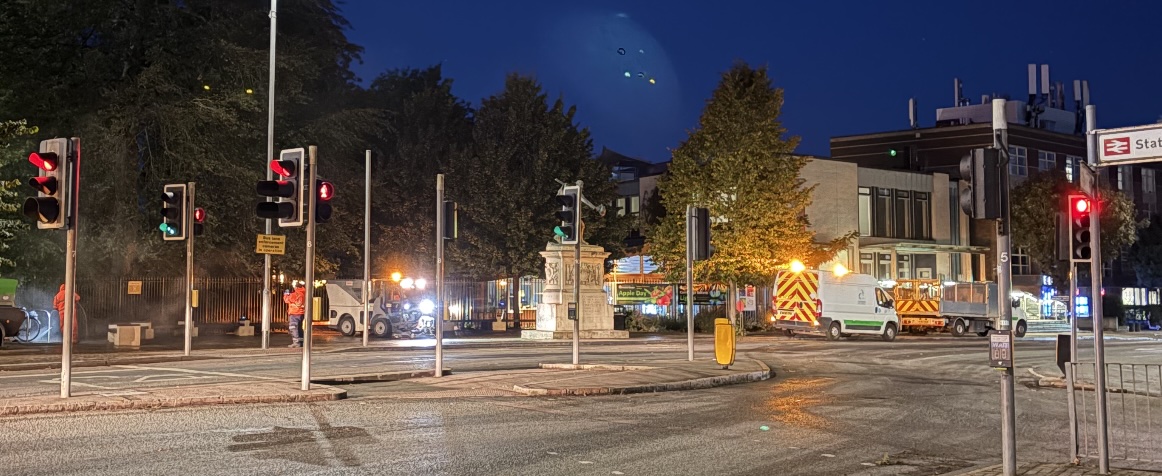
Redeveloping the Beehive Centre

I’ve just been talking to Emma Bullimore on BBC Radio Cambridgeshire about the Beehive Centre scheme which has been granted permission for an “outline application (with all matters reserved) for the demolition of existing buildings and structures and redevelopment of the site for a new local centre”(reference 23/03204/OUT if you want to check it on our planning portal).

I explained that earlier this year I had been on the planning committee waiting to consider the application and the case officer’s recommendation to refuse the application, when we heard that the Secretary of State for Housing, Communities and Local Government would make the decision. We decided to consider the application anyway and make an “in principle decision” so that we could listen to the case officer, objectors and supporters, and to debate the application. The committee unanimously agreed that to support the officers recommendation.

Continue reading “Redeveloping the Beehive Centre”

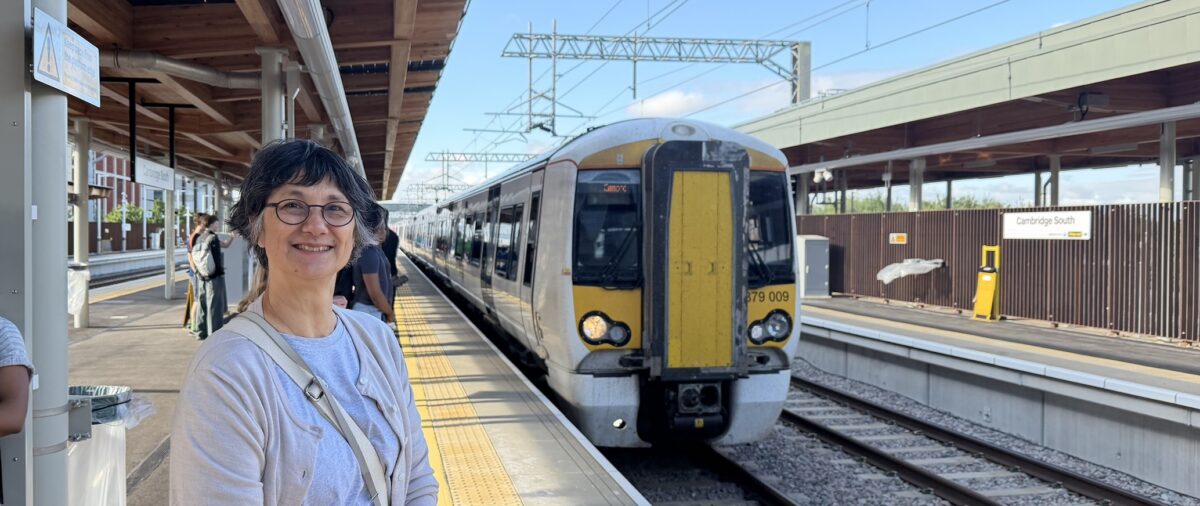
A Future for Rail in Cambridge

I’m a great believer in developing an integrated transport strategy that makes the best possible use of railways, and I’ve been the chair of the East West Main Line Partnership for some months now. The Partnership brings together the various local authorities and other bodies with an interest in EWR. The Partnership is not responsible for the design and route of the Oxford-Cambridge scheme – that is the responsibility of the East West Railway Company – but we are key to establishing the vision for this vital route.

Today I was briefed about current progress, and will have a further meeting with two planning officers who are now dedicated to the work of EWR and the implications for South Cambs and Cambridge. This follows the announcement from the Department for Transport about the development of the service and includes hybrid battery-electric trains to deliver faster, greener services along the partially electrified route while keeping costs down, a new eastern entrance at Cambridge station and – finally – formal plans for a new Cambridge East station. This is something I’ve been advocating for years and it’s great to see it come to pass. And it’s good to see that the announcements are in line with the submission to the consultation made by the Shared Planning Service on behalf of South Cambs and the Cambridge City Council.

Continue reading “A Future for Rail in Cambridge”

Roads and plans

I had an interesting day on Saturday, beginning by trying to avoid being run over by cars or cyclists as I draped a tape measure across Ainsworth Street in the company of my fellow councillor, Richard Robertson, followed by a deep discussion about the future of the whole of Greater Cambridge at an event organised by local historian and advocate for democracy, Anthony Carpen. From the gutter to the far horizons.

First the gutters. The County Council is consider a resident parking scheme for Ainsworth Street, and parts of Hooper Street, Sturton Street Sleaford Steet, Abbey Walk, and Fairsford Place in Petersfield ward. It has been under consideration for several years and while most people agree that a scheme is required some people have serious concerns about the details and the proposed final locations of parking spaces.

One issue is whether streets are wide enough to allow safe parking on both sides or if it must be restricted. At the moment Ainsworth Street has parking on both sides along most of its length, and the scheme proposes a change to parking only on one side.

Continue reading “Roads and plans”

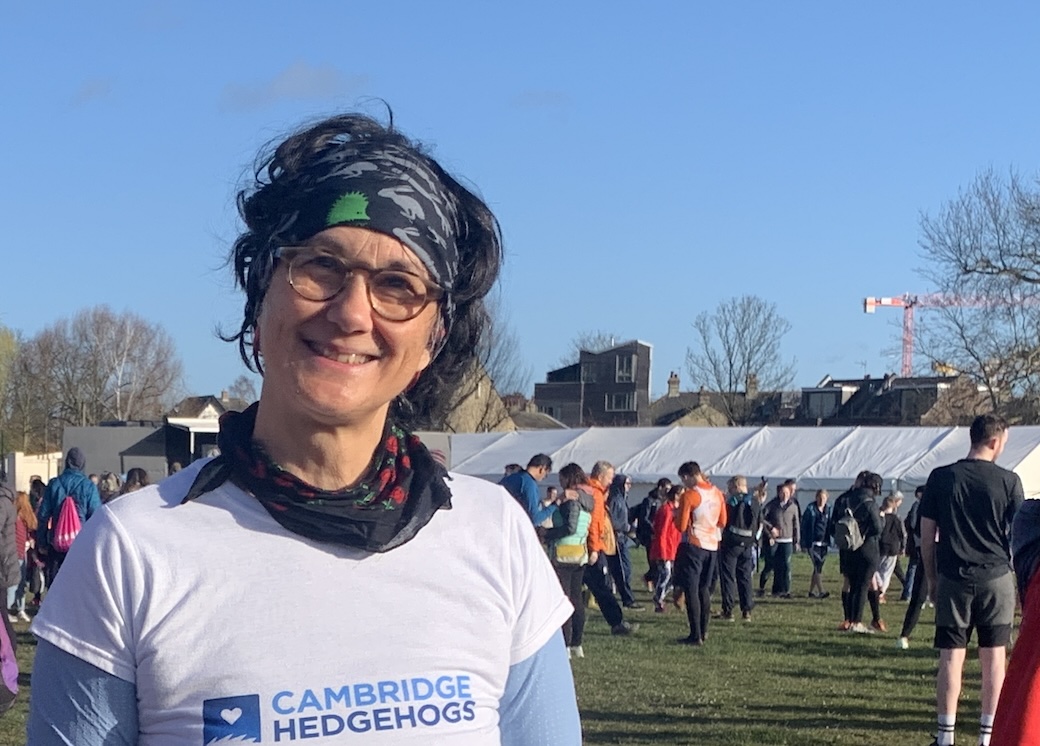
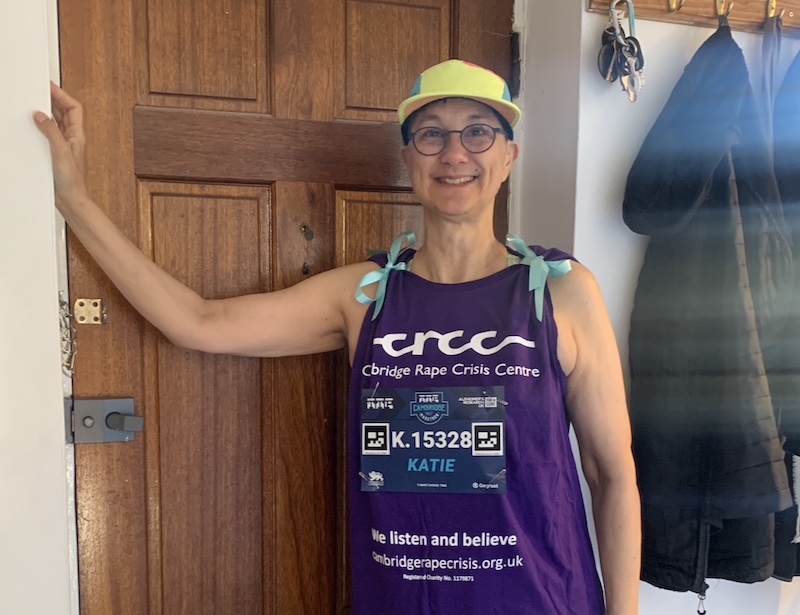
Running the Town and Gown 10K

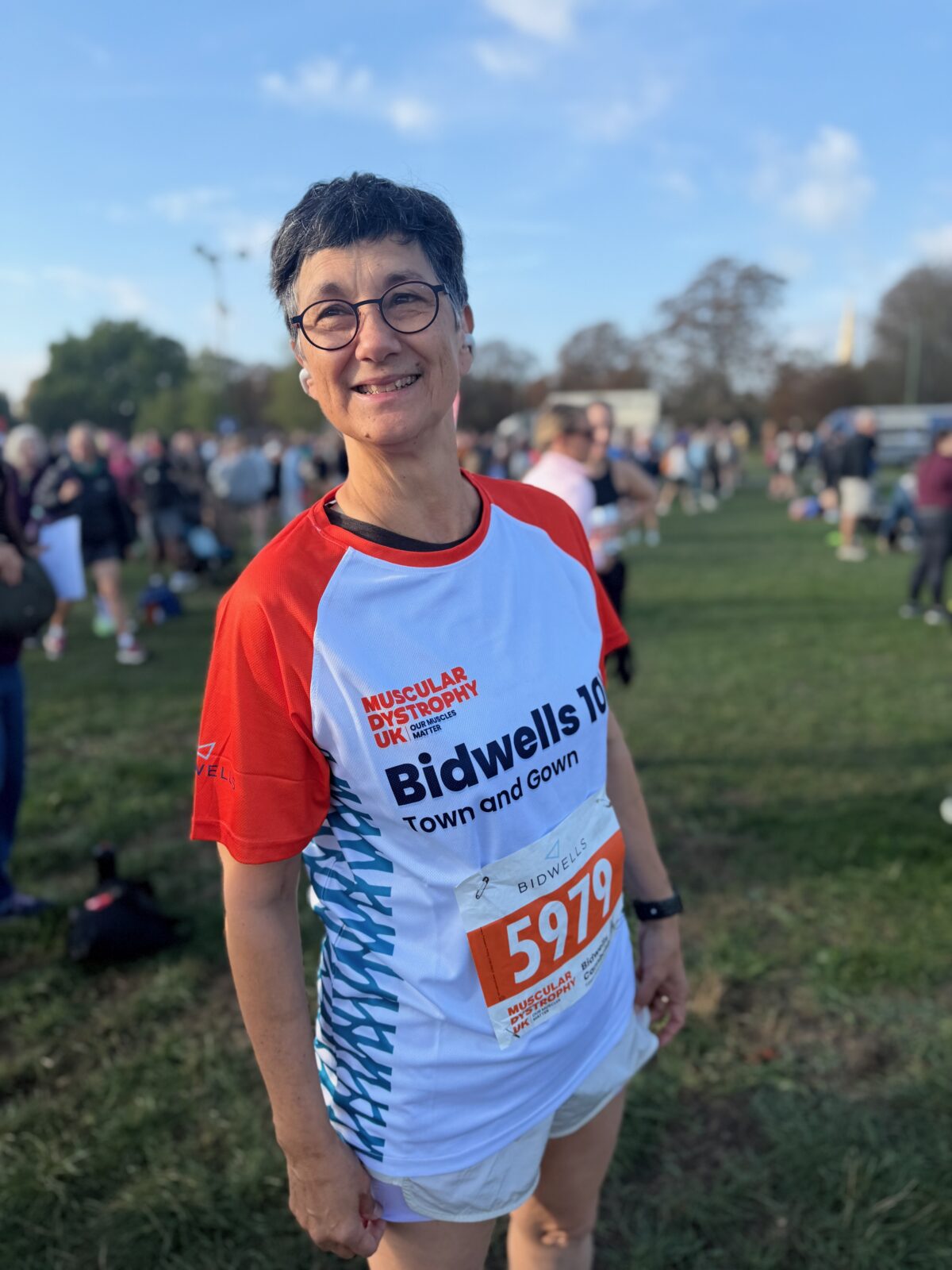
I’m currently sitting in The Alex, one of Cambridge’s finest pubs, enjoying a pint after running the Cambridge 10K in 1hr 03 min, a much better time than I thought I’d manage when we headed off to Midsummer Common this morning.

The organisation was excellent, the atmosphere was friendly and welcoming, and there were people cheering us on. And the weather was kind.

I was raising funds for Muscular Dystrophy UK and I’m pleased to have made a small contribution to research into this genetic condition in the hope that we can improve treatments and find a cure.

On the way to Cardiff

Today I’m off to Cardiff to join the launch of the Public Map Platform, a project led by Cambridge University to create a mapping tool that captures and highlights what truly matters to communities. I’m very excited about this.

“Public Map is an open-source mapping platform that aims to show that a transparent and trustworthy planning system based on maps made by and for communities is really possible.” The wonderful Professor Flora Samuel will be there and speaking. What will I learn and are there lessons for Cambridge?

And I’m travelling to Cardiff by train. Through the magnificent Paddington station which has reminded me of the very many times I was here as I travelled to Bath during my student days. Will we be able to travel from Cambridge to Oxford and onto Bristol and Cardiff when the East West Rail arrives in our city? I think that we will!!

Regarding trains… I’m pleased that Rail Future East Anglia has been added to the statutory list for rail strategy consultation after I raised this at the July 2025 Peterborough and Cambridgeshire Combined Authority (CPCA) Transport Committee where I am the Cambridge representative.

I managed to catch a couple of speeches and a debate at the Cam Tech event that was held at the Cambridge Guildhall two weeks ago. At the event I met the new CPCA Mayor Paul Bristow and briefly discussed trains, local democracy and small businesses.

Tomorrow I have the planning committee, where we will consider three Minor applications.

The following Wednesday I will be chairing the Joint Planning Advisory Group which will be held at South Cambridgeshire District Council in Cambourne .

On Thursday 9th I will be attending the full Council meeting at the Guildhall.

In between all of this I know I’ll get many opportunities to meet residents and businesses, join their meetings, walk around some estates and gardens. A very varied few weeks.

And at the weekend I’m running the Town and Gown Cambridge 10K

The Cambridge South East Transport Scheme

I have just spoken at the Cabinet meeting of Cambridge City Council in the Guidhall, where I presented a report on CSET or the Cambridge South East Transport Scheme, a proposal for a busway and active travel route between Cambridge Biomedical Campus and a new Travel Hub on the A11 at the junction with Babraham Road (A1307), with bus stops at Great Shelford, Stapleford and Sawston.

It was agreed that the City Council would move to prepare its own submission on the scheme, so that we can contribute to the planned public enquiry.

The report is on the City Council website: Transport Order and Draft Response. and this is what I said:

This item concerns the Cambridge South East Transport scheme, or CSET, which is a proposal for a busway and active travel route between Cambridge Biomedical Campus and a new Travel Hub on the A11 at the junction with Babraham Road (A1307), with bus stops at Great Shelford, Stapleford and Sawston.

Continue reading “The Cambridge South East Transport Scheme”

Talking About Mill Road

The bus gate on Mill Road bridge continues to be one of the main topics people raise with me as a ward councillor for Petersfield, which includes the western half of the road. As a councillor, I’m committed to listening to all points of view and trying to help us all find a way forward that brings the community together.

So last night I attended a meeting at the Mill Road community centre organised by the group Cambridgeshire ACTION, whose website states that they are ‘a non-party political, grass-roots movement of citizens from across Cambridgeshire’ created for people with ‘concerns about the unfair, undemocratic and unwelcome decision making by the various tiers of local authority and other unelected decision-making bodies in Cambridgeshire.’

In the past they have campaigned against the closure of the bridge and promoted protests against what they call ‘this ridiculous plan to discriminate against all vehicles,’ so they are not a neutral body. However I felt it was crucial to be there to listen and to share what I know about the bridge closure. And the meeting was convened to discuss not just those concerns, but also the potential opportunities for Mill Road.

The room was full, with about 70 people present. It was a real mix of the community – residents, local shopkeepers, and organisations like Living Streets. I was there alongside my colleagues City Councillor Dave Baigent from Romsey and the new County Councillor for Romsey, Darren Green.

Continue reading “Talking About Mill Road”

York Street Residential Parking Proposal Deferred

At the Cambridge Joint Area Committee at the Guildhall on Wednesday 11 June the main agenda item was the “Traffic Regulation Order objections associated with the introduction of the York Street area Residents Parking Scheme”.

The whole agenda and papers can be seen on the council website.

The discussion was around a recommendation that “the Executive Director of Place and Sustainability, in consultation with the Local Member, approves the implementation of the York Street area RPS, as published.” You can see the details here.


It was a constructive debate, with public questions from residents of York Street, Fairsford Place, Sleaford Street and Ainsworth Street, which officers answered and members sought clarification on.

In the end we decided to defer the item to the next September 2025 committee meeting. I seconded this proposal and asked that members and officers work quickly and efficiently to deal with the concerns raised and provide further information.

The particular concerns raised were:

  • The proposed time period of the scheme.
  • The meaningful six months review, how this would be carried out and how comments would be collected.
  • Data that Ainsworth Street residents have asked for but not yet received.
  • A need to engage with residents of Fairford Place and nearby residents in Abbey Walk to consider the cul de sac nature of Fairsford Place, the lack of pavement or on-plot parking, and the severe pavement parking problems in that area.
  • Consideration of possible road calming measures.

So for the moment nothing has changed, and parking provision is the same. If we get the information and changes we are looking for then the scheme may be approved in the autumn and would come into effect a few months later.

The committee that discussed this, CJAC, is a joint committee of Cambridgeshire County Council and Cambridge City Council. You can find out about it here.

It’s needed because of the overlapping areas of responsibility between County and City but this will change when we move to a unitary authority in the next few years. When that happens it will be important that City councillors like me are still able to bring their deep local knowledge to bear on these important discussions.

Earlier this week Council leaders announced they have identified three preferred options for the reorganisation, and it’s worth looking at them closely.


Celebrating the Dragon Boat Festival

On Sunday the ‘Nihao! China’ Cambridge Dragon Boat festival took place on the Cam at Jesus Green, and I was very pleased to captain a boat of Labour councillors and their friends and family members as we took part in a day of thrilling and energetic races. With twelve boats taking part, we had three races in total and – to my real joy – we finished all three and improved our performance each time!

I’m really grateful to my fellow women councillors for coming out in support of the day, and to the rest of the crew who all put in so much hard work. The Dragon Boat Festival isn’t just a great day of fun on the river, it is a traditional Chinese holiday that occurs on the fifth day of the fifth month of the Chinese calendar, which falls late May or early June in the Gregorian calendar. It commemorates Qu Yuan who lived around 300BCE and was the prime minister of the southern Chinese state of Chu and is celebrated by holding dragon boat races and eating sticky rice dumplings called zongzi.

Katie, in a red t-shirt, gives a pep talk to her team before the race

In the evening I was a guest at the Welcome Banquet in Jesus College, along with our new mayor Cllr Dinah Pounds and my good friend Wei Sun, Chairman of the Chinese Community Centre in Cambridge. It was lovely evening, with great conversation, excellent speeches, and delicious food – which I enjoyed even more after my energetic day!

Cambridge Mayor Dinah Pounds speaks at the banquet

For me as a Hongkonger, these connections to the Chinese community in Cambridge are a reminder of home, a way for me to celebrate my background and heritage, and an important reminder that Cambridge is and must remain a City that welcomes and supports people from around the world.

What next for Mill Road?

As the City Councillor for Petersfield, an area that covers half of Mill Road, I’ve been closely following the discussions around the new bus gate and spoke out about it before it was introduced in March.

We’ve just heard that over 4600 fines for using the gate have been issued to drivers, as only buses, emergency services, taxis and blue badge holders’ registered vehicles are allowed to use the bridge. The number of fines has raised questions about the adequacy of signage and general understanding of what a bus gate means. I was pleased to have a chance to discuss this with Dotty Mcleod on BBC Radio Cambridgeshire this morning (around 08:15).

The new Combined Authority Mayor has also weighed in, following up his campaign pledge to work to open up the bridge, alithough he acknowledges he currently lacks the authority to make such changes, and in my view he should be focusing on the more strategic transport issues that fall within his authority

My primary focus, however, is on how we can move forward together. When the order was put in, I argued for a six-month review of its impact and effectiveness. I still believe a one-year review would be more beneficial than the planned two-year timeframe. as it would allow us to assess the impact across a full cycle of school terms and holidays and allow for changes to be made. I also question whether a 24/7 closure is absolutely necessary, or if a more nuanced approach could achieve the policy goals without such a blanket restriction for local people.

Continue reading “What next for Mill Road?”