Joining the dots between water, food, and a growing city

Each month I write a column for the Cambridge Independent (online here but it will ask you to acccept coookies or pay) that’s also published on the City Council website.

However I believe in a principle known as POSSE, which stands for Publish (on your) Own Site, Syndicate Elsewhere. You never know when someone else’s site will go away or add a paywall, so it’s worth having your own copy, under your control.

So here it is.


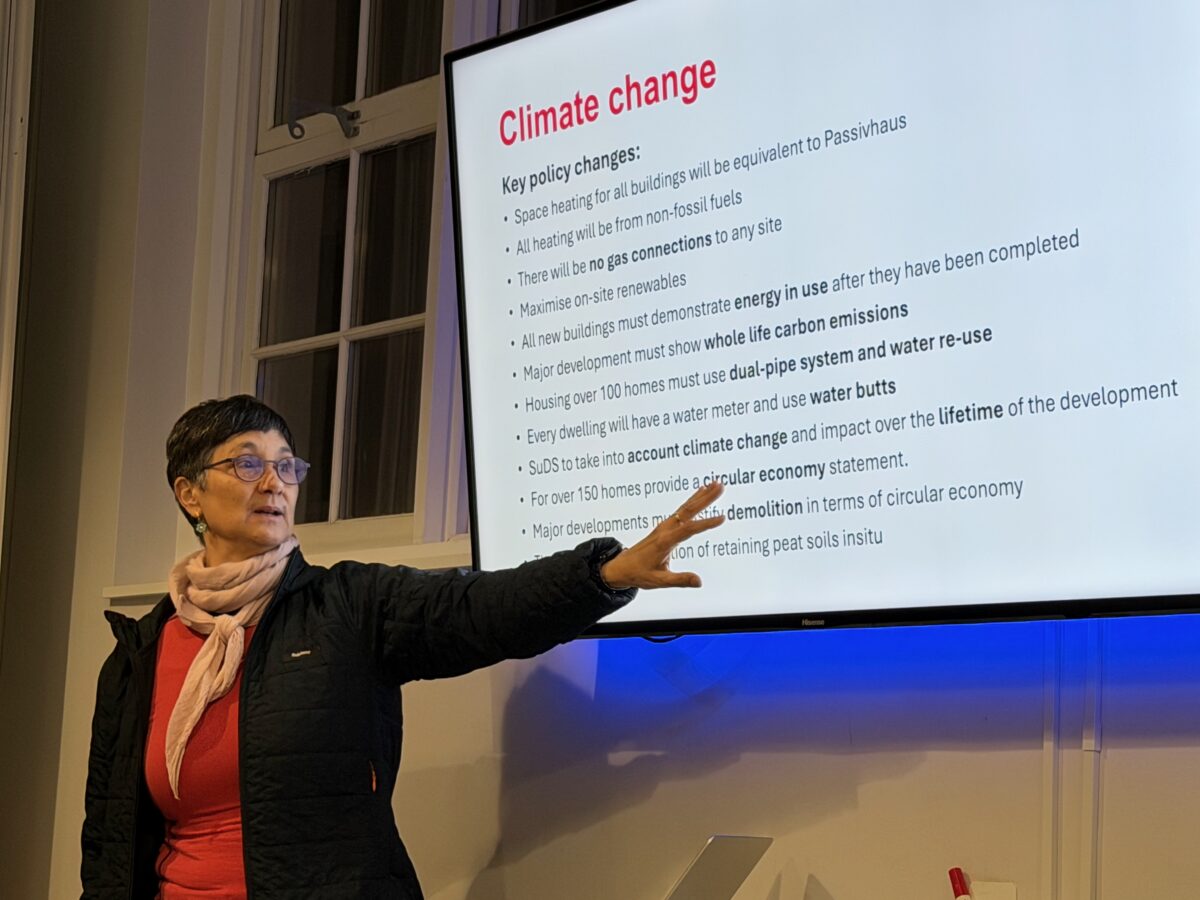
As the leader of Cambridge City Council, I often find myself reflecting on the issues that keep us up at night, not just as politicians, but as neighbours, parents, and members of a vibrant, interconnected community. And the recent hot weather, which has made it hard to sleep for many of us, has given me lots of time to consider the connections between climate change and two of the issues which got me into local politics in the first place – water and food.

Before I became a councillor I studied food policy and campaigned for food security. In 2024 the council’s support for the Cambridge Sustainable Food Partnership helped the city obtain a Gold Award from Sustainable Food Places, recognising Cambridge as leading the way in transforming local food systems to better serve our communities, the environment and the local economy.

However, it was always clear that water supplies in Cambridge were limited and precious, and the needs of farmers, developers and residents sometimes came into conflict. In 2019 I organised awater crisis forum with experts and local people to talk about the wider issues of how to get enough water to support the city as it developed, and the use of water for farming was one of the issues we discussed.

Continue reading “Joining the dots between water, food, and a growing city”

The future of Market Square

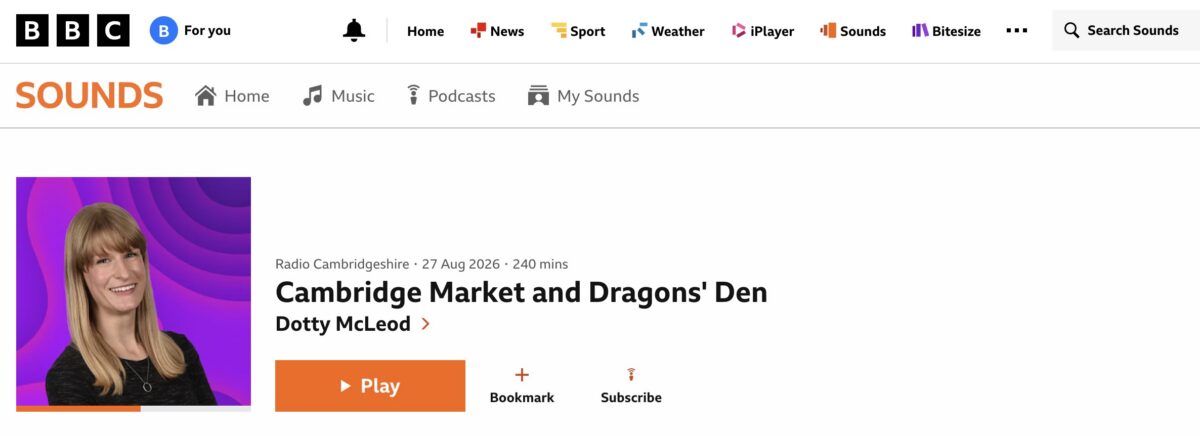
I was on BBC Radio Cambridgeshire with Dotty McLeod this morning, where I was joined by long-standing market trader Zoe Hardinge to talk about the future of the market, as a planning application is coming to the planning committee next Wednesday.

I know how important the market is to Cambridge, and go there regularly myself. In thinking about its future we want to preserve its vibrant, colourful character of our market while ensuring our stallholders can trade there successfully for years to come. We also want to make sure that the market square itself is a great civic space for everyone, especially in evenings when the market isn’t operating.

During our conversation, Zoe highlighted several practical concerns from experienced traders, particularly around future rent structures and the proposed balance between fixed, open, and demountable stalls. I agreed with her that traders need clarity on these rates so they can plan ahead with confidence. Retaining our existing stallholders and helping them run successful, profitable businesses remains central to our vision, which is why we’re putting in special arrangements to relocate stalls while the work is being carried out.

To make the square fit for modern use, we are also delivering essential background infrastructure. We are upgrading water supplies, drainage, and power across all stalls, replacing the current uneven surfaces with a single level floor for improved accessibility, and moving commercial bins underground to create a cleaner, more hygienic environment. Environmental sustainability is embedded throughout the design, featuring insulated roofs and solar panels on fixed stalls, green roofs on semi-permanent stalls, new tree planting along the northern edge, and the full restoration of the plumbing of the central fountain.

And the layout of the market stalls themselves will adapt as needs change. If future demand shows we need a different proportion of open or demountable space, we have the flexibility to adjust.

Beyond daily trading, Market Square is the civic heart of Cambridge, sitting directly in front of the Guildhall. By using stalls that can be put aside during quieter winter months or special events, we can create an adaptable, welcoming space for wider community gatherings while ensuring permanent traders continue to operate seamlessly year-round. Our ultimate goal is to create a safe, bustling, and beautiful civic space that honours our heritage, supports local businesses, and serves everyone in our community.

Listen here – scroll forward to 2:07:45

“The Soul of Chinese Music”

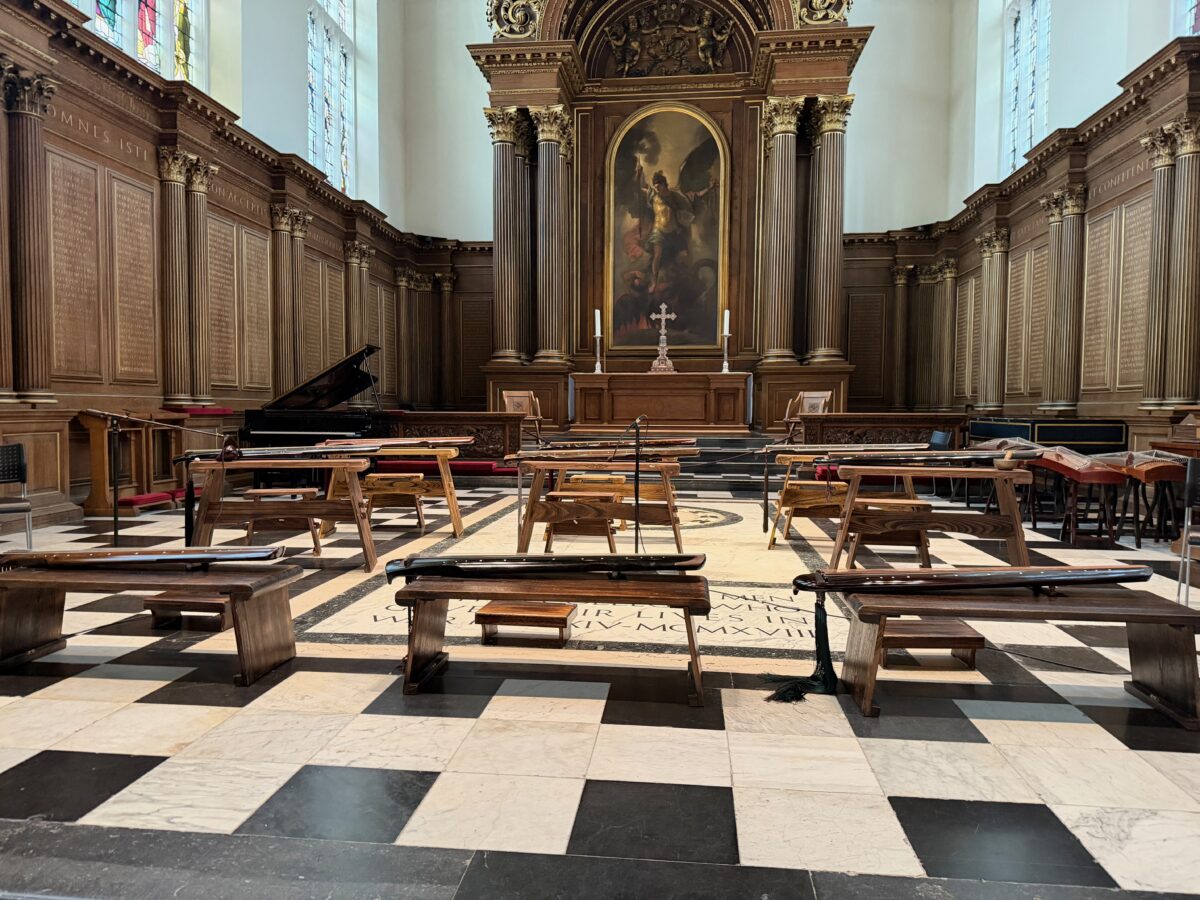
On Saturday I was at a fabulous concert of Chinese music held in Trinity College Chapel as part of the extensive Cambridge Chinese Music & Culture festival, which is co-hosted by the Cambridge Qin Society, Cambridge University Chinese Orchestra Society and Cambridge Chinese Community Centre.

The concert lived up to its name, The Soul of Chinese Music, and it was a real pleasure to hear the wide variety of musical styles, played on instruments from the guqin, the ehru and the yangqin to the piano and flute, and I especially enjoyed the Guqin Ensemble’s performances.

My good friend and former councillor and mayor Dinah Pounds and her husband Adam were also there to perform, with a beautiful meditation on passing time composed by Adam also on the programme.

Continue reading ““The Soul of Chinese Music””

A new mural for the Carter Bridge

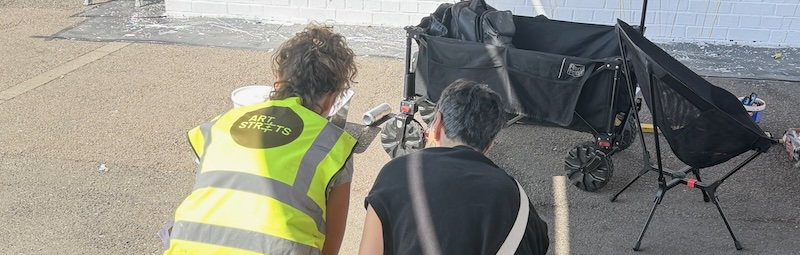
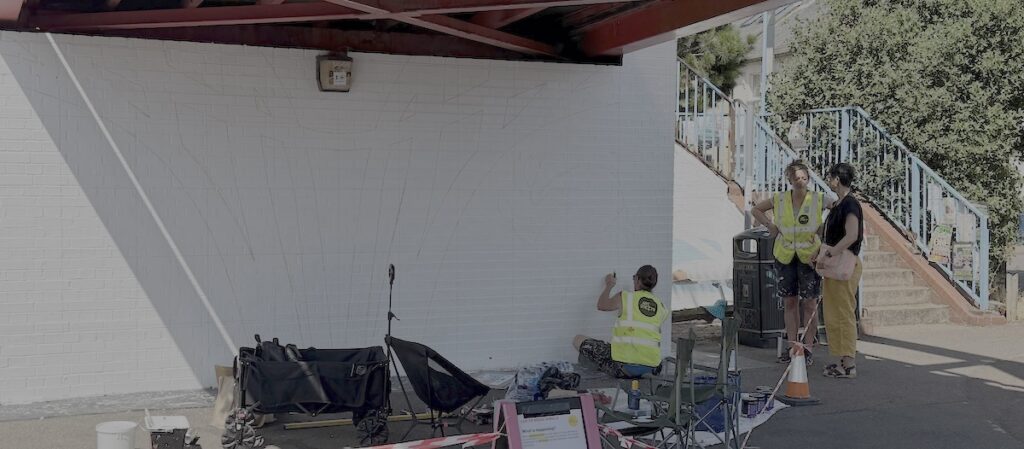
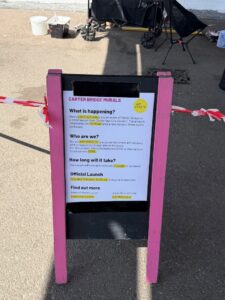
I’ve just been to see work starting on the new murals being painted on the Carter Bridge which crosses the railway line between Devonshire Road and Sturton Street.

It’s a really exciting project funded by Cambridge City Council and overseen by the Creative Partnerships team within Cultural Services. The murals have been developed by the community arts organisation Art Streets working with the local community through several workshops and other events.

The lead artist on the project, ATMA, is an international mural artist and participation specialist, and between now and the official opening of the murals on August 15 he will be working with a team that includes local volunteers to transform the base and interior of the bridge.

Katie and Iona talking at the base of the bridge while Matt from Art Streets works on the outline of the mural

It was a real pleasure to talk to Iona Hodgson from Art Streets, and to see ATMA’s vision start to take shape on the base of the bridge. I am looking forward to seeing the murals every time I cycle across the bridge or go to the railway station.

More about Art Streets: https://www.artstreets.co.uk/
More about the artist, ATMA: https://www.atma-art.com/

Let’s work together for Cambridge

At the Council AGM on May 21st no Leader was chosen and as a result there are no Cabinet members and all committee seats are vacant. We will reconvene as a Council on June 1 to resolve this. It is an unwelcome situation that has arisen because the other parties would not support me as Leader but were unwilling to put any other candidate forward or to propose a solution.
This is what I said at the end of the meeting. I call on the other parties to put the interests of Cambridge first and resolve things. They know where to reach me.

Here is the transcript of what I said:

Maria Cleminson: Councillor Thornburrow.

Katie Thornburrow: I have worked with Tim Bick and many of his members, very collaboratively and very successfully, and with enjoyment. I’ve also worked with Naomi Bennett, and Jean [Glasberg], and Hugh [Clough], with enjoyment, and we’ve been a really good council collectively. I have gone out of my way to work with green issues across the city.

And we need to get on and make make a decision about a leader. It may be that Tim could put his name forward, or you, Naomi.

We have put our case about our leader. We are prepared to be in opposition and we would still work constructively and collaboratively, and we would do everything possible for the best um, the needs of the council and our residents.

We have not said that we wouldn’t work with you in that way. And if you were to put your name forward today, and if that was the democratic decision going forward, we would then go and talk about the scrutiny committees and we would enable the council to get on.

We are prepared to work. We have a proposal about a way to work, you can propose a way. We feel that one of us could be a leader, and we will respect the democratic decision of of the councillors in this chamber.

Our proposal has not been accepted, I’d really value proposals from you. If we were in opposition, we would be constructive and collaborative. We would continue to work in our wards, and we would continue to do what we could for the council and the greater good.

Maria Cleminson: Thank you, Councillor Thornburrow

Serving the people of Cambridge

Yesterday I was elected as Leader of the Cambridge City Labour Group, and Councillor Rosy Moore (Coleridge) was elected as Deputy Leader. In a post on the Cambridge Labour website I said:

‘As Leader I am here to serve our community and ensure that every resident’s voice is heard as we work to make Cambridge a great place to live for all. I’m proud that under Labour Cambridge City Council has worked to tackle inequality and reduced our carbon emissions by 50%. I will ensure we continue to prioritise the climate and biodiversity crises, protect the environment, and support residents through the cost of living crisis we are facing.

‘I am very grateful to Cameron Holloway and Rachel Wade for their leadership of the council last year. We will continue to work hard to build more council homes, tackle homelessness, and provide high quality services for Cambridge residents.’

On Thursday 21st May Cambridge City Council will hold its AGM and the Leader and Cabinet will be chosen by councillors. I’ll write more after that meeting.

Details of the Council AGM, and how to watch it online, are on the City Council website.

Let’s talk about the Beehive Centre

In mid 2023 Railpen submitted an outline planning application for the redevelopment of the Beehive Centre, which backs onto several streets in Petersfield Ward.  The proposed remodelling of the retail centre as a life sciences facility with offices and some retail was not well-received, particularly by residents of the streets affected.  

Petersfield ward city councillors were also highly critical of the scheme. Mike Davey and Richard Robertson  were especially concerned about the scale of the buildings, their height and the proportions, and particularly the impact on the view from the rear gardens of York Street.

There was a formal consultation to which many of you contributed, and Mike Davey and Richard Robertson continued to speak out and met representatives of Railpen.  

Following the public response, Railpen is working on a revised scheme which they will then submit for planning approval.  They have prepared one version of this, and they are now carrying out their own, private, pre-submission consultation as part of their community engagement.

We expect them to make a formal submission the council based on the results of the consultation, but what they submit could well be different from what is in the leaflets and presentations.

Until that happens your ward councillors are monitoring things, talking to residents and will meet the developers of they feel it’s necessary. I am a member of the planning committee and I can’t pre-judge applications which I then decide on, not because I don’t care but because there is a later stage where I need to be able to act in accordance with planning law and in the best interests of Cambridge.

The discussion about the future of the Beehive has been heated and sometimes angry. It is understandable that feelings run high over  a major development like this, and as a City Council we are working hard to make sure that we listen to concerns and that the process for doing that is open and honest. 

In March the Council published its statement of community engagement which includes how we will run planning consultations. At the time I said ‘it’s through a concerted effort by everyone involved in planning that we can work towards improved transparency and arrive at a place of mutual trust’. I still hold to these principles

It is vitally important that everyone knows how to influence development in our area and make their voice heard. That remains a central principle, when it comes to the Beehive or any other planning application.

If you want to know more, please get in touch.

Working to Improve the Cam

We all care about the Cam and the chalk streams that supply it, and we all know that no plan for the future of Cambridge or the greater Cambridge area can go ahead without some solution to the water crisis that we face – itself just one aspect of the much wider climate crisis.

This is something I’ve been arguing for years, and in 2019 I organised the first major meeting about water in the region. Since then, it has been acknowledged by all the local councils and MPs from every party, and widely reported (as here in the Cambridge Independent).
 
So it’s a real pity when we see members of one party misrepresent the steps that we are taking as a City Council to do something positive to improve the quality of the Cam, put pressure on the water companies and the Environment Agency to take action, and raise awareness of the importance of our water supply.

Continue reading “Working to Improve the Cam”

Cambridge Needs More Than Content-Free Headlines

The Sunday Times (9 July) has a breathless report that Michael Gove is thinking of building a quarter of a million new homes in Cambridge, in order to turn the city into a ‘tech leader’, and that he will send a planning ‘hit squad’ over to ensure that annoying irritations like ‘eco rules’ don’t get in the way of his brilliant plan.

Apparently this will help to ‘fix England’s housing crisis and unleash growth in the life sciences and technology sectors’.

Let’s ignore for the moment that the chances of Gove still being Secretary of State for Levelling Up, Housing and Communities after next summer are very slim – indeed it is unlikely that his band of failed Tories will be anywhere near ministerial office.

And let’s ignore for the moment that the ‘tightly guarded’ plan, which goes under the mysterious code name ‘Cambridge 2040’ (I wonder what it could be about…) seems to consist of some under-researched aspirations and a briefing to a friendly newspaper in a desperate search for positive headlines.

What would it take to actually deliver such a plan, assuming we wanted it?

Continue reading “Cambridge Needs More Than Content-Free Headlines”

Thank you, Petersfield

Petersfield Results
Katie Thornburrow 1302 votes 50 per cent
Emmanuel Carraud 509 votes 19 per cent
Joshua Morris-Blake 449 votes 17 per cent
Paul Roper 370 votes 14 per cent

Thank you to everyone who voted in Petersfield on 4th May. Thanks to the other candidates Emmanuel Carraud, Joshua Morris-Blake and Paul Roper, who also stood in our democratic election for a seat on Cambridge City Council.

I’m grateful to have been returned as your councillor. Thank you for every vote. Thank you for telling me about your lives and issues over the last few weeks. Thanks for listening to me and reading my leaflets.

Continue reading “Thank you, Petersfield”