Looking at the resilience of Cambridge

You may have noticed that things have been a little bit tricky for me at the moment as a failure to reach agreement on the leadership of Cambridge City Council at our AGM on May 21st means that there are no council committees, no cabinet members, and attendance at external events has largely stopped because we no longer hold formal roles.  It should all be resolved when we meet on Monday June 1st.

While there are lots of meetings and conversations, my diary is strangely empty, because the many briefings, training sessions, committee meetings and other council business has all temporarily gone.  But it does leave me free for some of the work I do in addition to being a councillor, around food policy, water scarcity and the climate emergency.

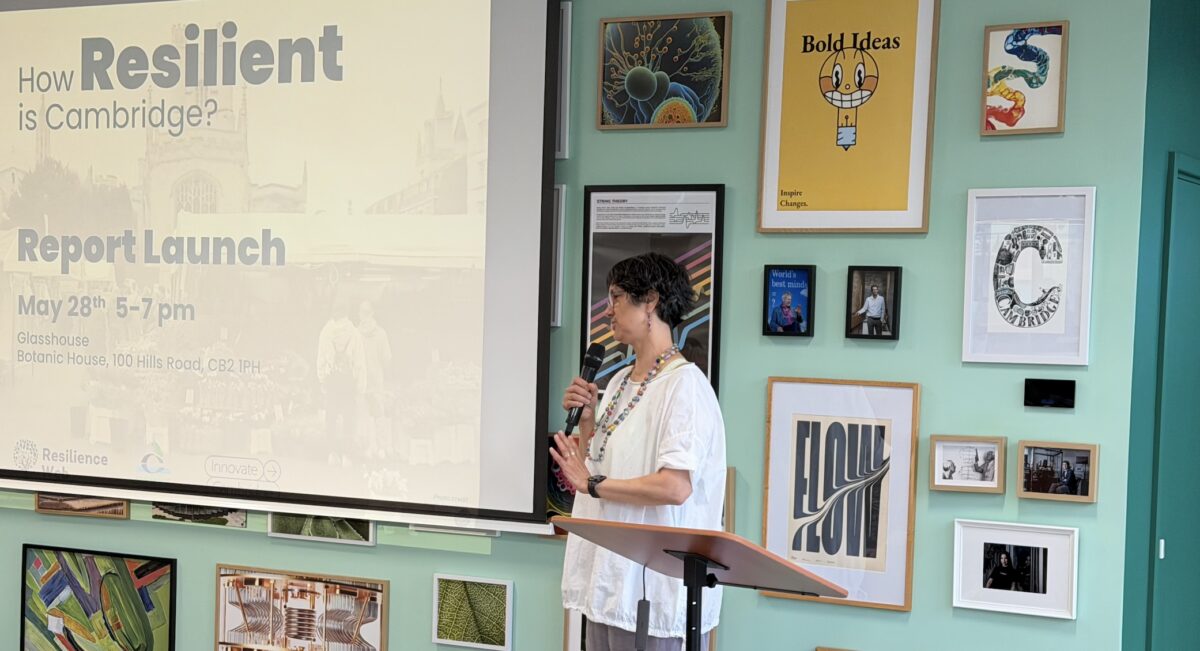
Yesterday I got to see the latest stage of a project that I’ve been involved with for a long time, looking at how resilient Cambridge is in a number of key areas. Resilience Web Cambridge and the Cambridge Room organised a series of seminars and have now published a report on what they found.

The events ran from Wednesday 21 January to Wednesday 8 April 2026 and looked at food, reuse, flooding, energy, communications, community. Each involved a group of experts drawn from local community groups as well as national experts, local councillors and the interested public. They were organised as hybrid meetings.

The report is a vitally important document, but it doesn’t mark the end of the project – because now we follow through what we are reporting on.

There will now be workshops to explore solutions, using the good practices that have been identified by the project to date, and we are considering how to develop resilience toolkits for local residents to use. As Helen Cook and Charlie Barty-King from Resilience Web put it, “resilience isn’t just about bouncing back after disaster, but about transforming how we operate now to anticipate and avoid crises as much as possible, and to make a positive response to a crisis second nature.”

I was really pleased to be able to introduce the report to a packed room at the Glasshouse, and to have the chance to talk to so many people about this important work.

Read more on the Resilience Web website

Download the full report here.

Download the summary as a PDF here.
Let’s work together for Cambridge

At the Council AGM on May 21st no Leader was chosen and as a result there are no Cabinet members and all committee seats are vacant. We will reconvene as a Council on June 1 to resolve this. It is an unwelcome situation that has arisen because the other parties would not support me as Leader but were unwilling to put any other candidate forward or to propose a solution.
This is what I said at the end of the meeting. I call on the other parties to put the interests of Cambridge first and resolve things. They know where to reach me.

Here is the transcript of what I said:

Maria Cleminson: Councillor Thornburrow.

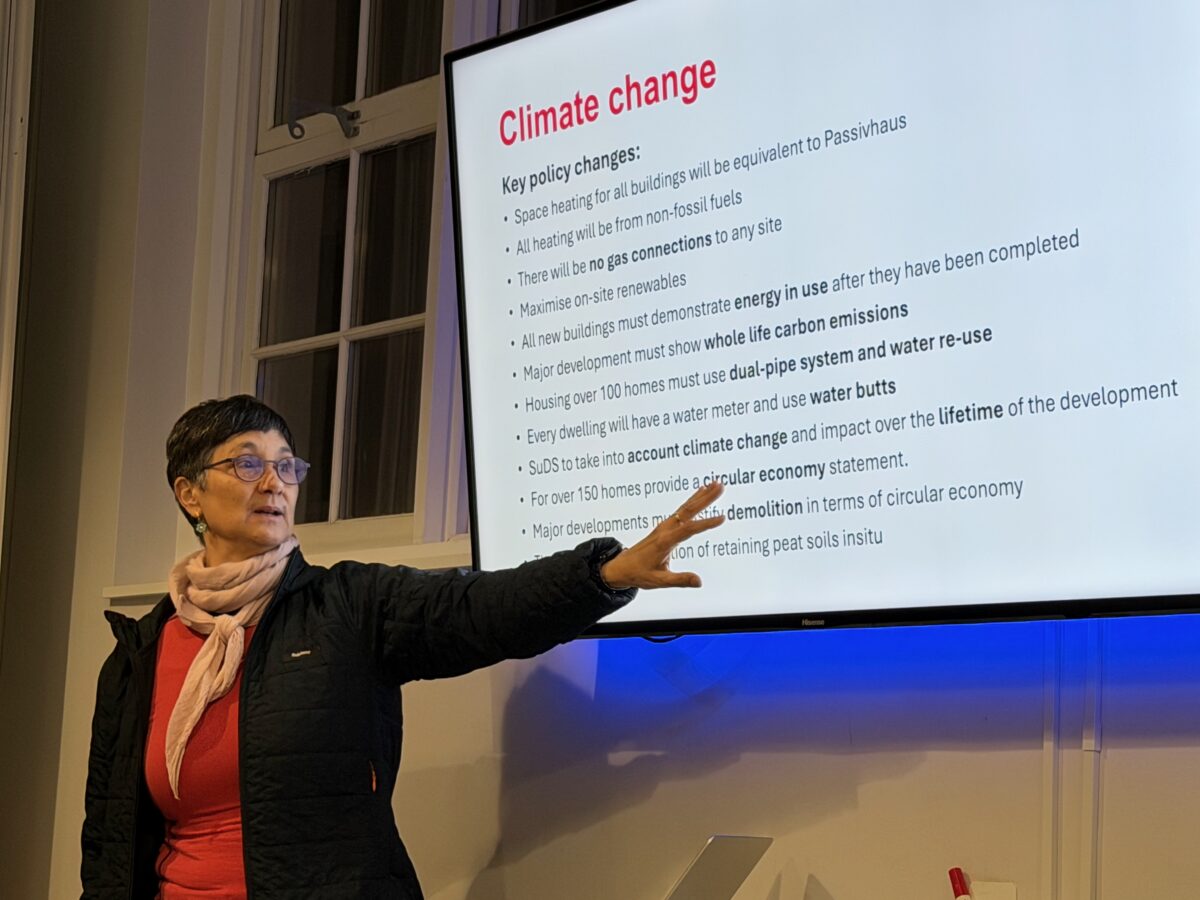
Katie Thornburrow: I have worked with Tim Bick and many of his members, very collaboratively and very successfully, and with enjoyment. I’ve also worked with Naomi Bennett, and Jean [Glasberg], and Hugh [Clough], with enjoyment, and we’ve been a really good council collectively. I have gone out of my way to work with green issues across the city.

And we need to get on and make make a decision about a leader. It may be that Tim could put his name forward, or you, Naomi.

We have put our case about our leader. We are prepared to be in opposition and we would still work constructively and collaboratively, and we would do everything possible for the best um, the needs of the council and our residents.

We have not said that we wouldn’t work with you in that way. And if you were to put your name forward today, and if that was the democratic decision going forward, we would then go and talk about the scrutiny committees and we would enable the council to get on.

We are prepared to work. We have a proposal about a way to work, you can propose a way. We feel that one of us could be a leader, and we will respect the democratic decision of of the councillors in this chamber.

Our proposal has not been accepted, I’d really value proposals from you. If we were in opposition, we would be constructive and collaborative. We would continue to work in our wards, and we would continue to do what we could for the council and the greater good.

Maria Cleminson: Thank you, Councillor Thornburrow

Serving the people of Cambridge

Yesterday I was elected as Leader of the Cambridge City Labour Group, and Councillor Rosy Moore (Coleridge) was elected as Deputy Leader. In a post on the Cambridge Labour website I said:

‘As Leader I am here to serve our community and ensure that every resident’s voice is heard as we work to make Cambridge a great place to live for all. I’m proud that under Labour Cambridge City Council has worked to tackle inequality and reduced our carbon emissions by 50%. I will ensure we continue to prioritise the climate and biodiversity crises, protect the environment, and support residents through the cost of living crisis we are facing.

‘I am very grateful to Cameron Holloway and Rachel Wade for their leadership of the council last year. We will continue to work hard to build more council homes, tackle homelessness, and provide high quality services for Cambridge residents.’

On Thursday 21st May Cambridge City Council will hold its AGM and the Leader and Cabinet will be chosen by councillors. I’ll write more after that meeting.

Details of the Council AGM, and how to watch it online, are on the City Council website.